|
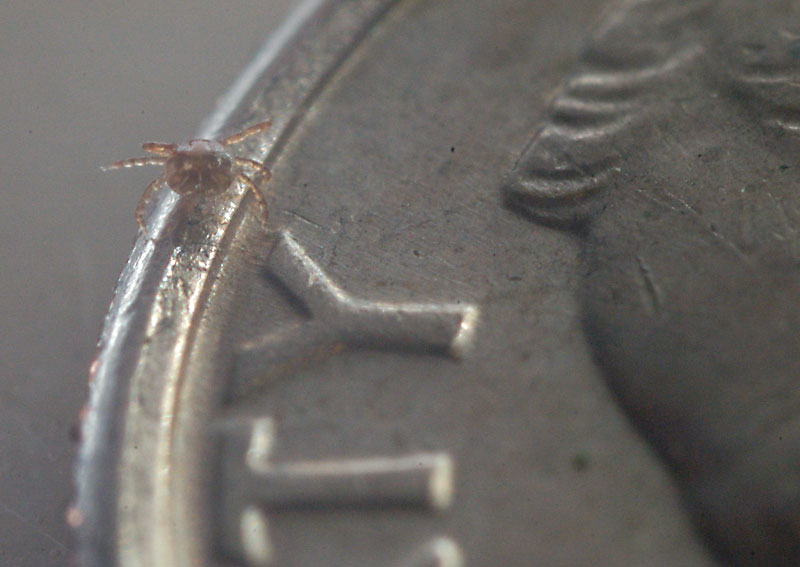
| The numerous species of chigger are in the Family Trombiculidae. |
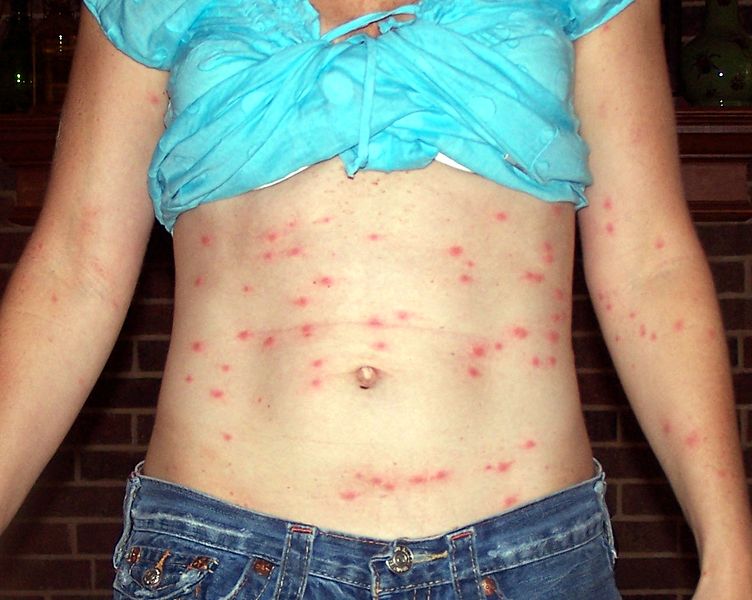 |
| Chigger bites will look a bit like pimples |
It's the larvae that do the biting, and boy do those bites itch like crazy! When the initial bite occurs, you won't even know it happens, but after some time you will feel a burning sensation, followed by severe itching. The bites of chiggers found in the United States aren't dangerous unless you scratch them too much and cause an infection, so something to calm the itch is a very good suggestion. Though many think they feed on blood, in fact they do not, instead ingesting tissue that is liquified using specialized saliva. Despite what many people assume, the larvae do not burrow into the skin. Instead, only the mouth-parts are inserted and thus the chigger is usually easily knocked off with the scratching that follows their bite. So, all of the home remedies that are supposedly meant to suffocate the burrowed creatures are pointless.
Luckily, applying bug spray that contains DEET will help keep the chiggers away. Certain types of clothing also helps, namely the general suggested dress for romps through the woods: tight-woven clothing covering as much skin as possible, with pants tucked into boots and sleeves and collars fitting close to the body. Products can also be applied to fabrics to help ward off chiggers. Also, it's helpful to know about whatever areas where you live are infested. When I was doing my undergraduate studies, we spent a lot of time trekking through heavy brush and my professors often warned us about where they knew chiggers would be found. Areas can be treated using certain pesticides or cutting down brush to control or eliminate these small creatures, but this isn't always practical.
Sources are Ohio State University, University of Florida, Missouri Department of Conservation, and PubMed Health. Images are from Wikimedia Commons under Creative Commons licenses: one, two.