Showing posts with label interesting animals. Show all posts

Monday, August 20, 2012

Interesting Animals: Ladybird Spider

Only the males of the Eresus sandaliatus species are so brightly colored
 There are some really beautiful forms of mimicry in the animal world, and this species is one example. Ladybird spiders, the males at least, mimic ladybugs, which are also known as ladybird beetles. Female ladybird spiders are really rather nondescript compared to their flashy counterparts, with mostly black bodies. Though there are other ladybug mimics out there that have the smooth, shiny body like those seen in real ladybugs, the ladybird spider is actually fuzzy. Indeed, it's a member of a group known as the velvet spiders, who share the trait.

Ladybird spiders like to live in sheltered areas, creating burrows that they line with silk. Silk is also radiated out from the burrow to act as a sort of tripwire. If prey touches the silk, it signals the spider to attack. They feed on various species, including some sizable species of beetle. Females don't leave their burrows much, so as you can imagine this could make life somewhat difficult for the males. When out searching for a female, they have to pluck at the females' silk threads to let her know they aren't prey and avoid being eaten.

The species is European and their numbers aren't great, to the point of them being Endangered in the United Kingdom. Times were tough in the 1990's when it was believed only fifty of these spiders were left in Britain. Captive breeding and other conservation actions have done a lot, and now there are around six hundred wild spiders.

Source is ARKive. Image is from Wikimedia Commons under a Creative Commons license.

Friday, July 13, 2012

Interesting Animal: Victoria Crowned Pigeon

A Victoria crowned pigeon (Goura victoria), showing off its flashy crest
The Victoria crowned pigeon is perhaps the most unusual looking member of the pigeon family. Blue in color with a maroon chest and head topped with lacy feathers, these birds are definitely unique. Also rather unusual is that these traits, particularly the crest, are usually seen in only males of countless bird species. Instead, Victoria crowned pigeons all look alike.

Strutting pigeon
The species is native to New Guinea and Indonesia, where it prefers lowland swampy areas and forests of sago palms. They forage in groups and mostly eat fruits and seeds. Males use courtship behavior to find a mate, which includes head bowing and tail movements.

The species is currently considered Threatened and their numbers are declining. Due to its beauty, it is hunted for its feathers. It is also eaten, either as a result of hunting or capturing of nestlings which are then raised for food. Apparently, it's very hard to hunt the birds if you don't use a shotgun due to their flight distance. In New Guinea at least, shotguns aren't really available. Of course, efforts are being undertaken to work on helping keep the species around, which include such efforts as encouraging ecotourism.

Sources are ARKive, Bristol Zoo Gardens, Bird Life International, and the IUCN Red List. Images are from Wikimedia Commons under Creative Commons licenses: one, two.

Friday, July 6, 2012

Interesting Animals: Chinese Giant Salamander

A Chinese giant salamander (Andrias davidianus) in Germany
Growing up to one hundred eighty centimeters in length and weighing over eleven kilograms, the Chinese giant salamander is the world's largest living amphibian. Such massive size is unusual, however, with most individuals being somewhat smaller than that at about one meter maximum. Still, they are amazingly massive creatures compared to most of the salamanders you will find out there, which are often smaller than the palm of the average person's hand. They are purely aquatic and are native to mountainous, fast-flowing, cold waterways of China. They feed on a variety of animals, including other salamanders, snails, worms, crayfish, insects, and fish. Lacking external gills as adults, they mainly breath through their skin as the lungs they have are inefficient.

A giant salamander in Shanghai
Unfortunately, this species in Critically Endangered. Considered a delicacy in Asia, they are commonly caught for food. Though some farming has been tried, the majority of individuals being sold for food are believed to be wild-caught. Part of the reason why they have been a popular catch is due to the fact that they aren't hard to catch: hunters need only search in crevices in rocks and then pull the salamanders out. With sale prices up to one hundred dollars per kilogram, one salamander can be a very lucrative capture. Unfortunately, there isn't currently much regulation of such harvesting.

The waterways these creatures live in are being threatened thanks to runoff from farming and deforestation. This brings pollutants as well as silt, which have lead to both a decrease in population size, but also a decrease in the average body size of the species. The change in population over the past thirty years has been described as "catastrophic." Once common, these strange amphibians are now quite rare. Attempts are being made to save the species, but populations are currently decreasing. Estimated generation time if fifteen years, so any increases in population size, if any, will take some time to become noticeable.

Sources are the ARKive, IUCN Red List, and EDGE. Images are from Wikimedia Commons under Creative Common licenses: one, two.

Saturday, June 23, 2012

Interesting Animals: Pseudoscorpion

A pseudoscorpion (aka "false scorpion"), showing the pincher-like pedipalps that give the group its name
Pseudoscorpions are arachnids, placing them in the same group as spiders, scorpions, and ticks, mites, daddy-long-legs, many other eight-legged creatures. They are small with a maximum body length of eight millimeters. Like spiders, these arthropods have silk glands, though their glands are near their mouth rather than at the end of their abdomen. Though they are harmless and lack stingers, the "scorpion" part of their name comes from their large, pinching pedipalps much like those seen in scoprions. Pedipalps, or are basically an extra pair of legs used for various purposes in arachnids, including feeding, defense, and reproduction.

The majority of pseudoscoprion species are found in the tropics, but there are also those found in colder climes. Rarely, they can turn up inside of homes. They are most often found in humid areas, so if found in a house they will usually be seen in bathrooms or basements. Since these animals are harmless, if you find one in your home it's recommended you leave them be. However, the best way to get rid of them is to dry out the area they are found.

Pseudoscorpion phoresy on a fly
These creatures are one of several groups known to practice phoresy, which would be more commonly referred to as hitchhiking. Some species of pseudoscorpion will attach themselves to the bodies of other insects so that they can be transported from place to place. One of the few times I've actually seen a pseudoscorpion was when one fell out from under the wing of a captured beetle that it had been riding on. Phoresy is an interaction where one species gains benefit and the other is unharmed and thus is a form of commensalism.

Though there are about two thousand species of pseudoscorpion, they are apparently difficult to identify.

Sources are Penn State, University of Minnesota, Texas A&M, and Michigan State University. Images are from Wikimedia Commons under Creative Commons licenses: one, two.

Sunday, June 3, 2012

Interesting Animal: Klipspringer

A male Klipspringer (Oreotragus oreotragus, from the Greek for "mountain goat")
Klipspringers are a small species of African antelope that lives in rock areas from Ethiopia to South Africa. As is common in antelope, only males have horns. The horns are small, with their ears being longer. They are a shy sort, which is a common attribute of a prey species. Africa can be quite hazardous, and klipspringers are eaten by the likes of jackals, caracals, leopards, hyenas, servals, and even large snakes. The species averages about fifty centimeters in height and about eleven kilograms. For an antelope, they really are rather petite.

However, small size is not what makes these animals unique. As you can see in the image above, they have hooves like no other. While all hooved animals walk on their toenails, the klipspringer in the only species to walk on the very tip of their nails. This is why they have such an upright stance. Because of this as well as the structure of the hoof itself, these little antelope are quite agile, which serves them well in their rocky habitat. Their hooves are small--about the size of a dime--and they can easily stand with all four feet close together to perch on small rocky spires. Their graceful movement is often compared to ballet dancer, and their hooves to one dancing on point. Though this comparison is rather fitting, there is one small sticking point: ballet dancers on point are not dancing on their toenails.

Here's a video of a klipspringer at Rotterdam Zoo:


Sources are Animal Diversity Web, ARKive, Honolulu Zoo, and Ultimate Ungulate. Image is from Wikimedia Commons under a Creative Commons license. Video is from YouTube.com.

Friday, May 11, 2012

Interesting Animals: By-the-Wind Sailor

By-the-wind sailors (Velella velella) stranded on a beach
These fairly small creatures are somewhat similar the more well known Portuguese man-of-war. Instead of a large float, however, the by-the-wind sailor has a sail that extends vertically from its tissue that allows them to be carried by the wind. They are most often seen stranded on beaches, where they may come to shore in very large numbers. They are found in the warm waters and these strandings are a consequence of wind travel. The sail is actually angled along the body axis at an approximately forty-five degree angle and points toward the beach that will eventually be the animal's resting place.

A better view of the sail and size
Structure-wise, it is basically one upside-down polyp that settled on the water's surface rather than the ocean floor. It's quite small at only a couple of centimeters across. A carnivore, it can only catch what food is within its reach. Since it is so close to the surface, this is usually only very small bits of food. The species is also prey to some other animals. They are sometimes grouped with the Portugese man-of-war, but the two have a number of structural differences. One major one is the colonial structure of the man-of-war being so different from the single polyp of the by-the-wind sailor. The by-the-wind sailor was, however, once thought to be colonial as well, and was thus placed in the same grouping as the man-of-war.

Source is Animal Diversity Web. Images are from Wikimedia Commons and are copyright free: one, two.

Monday, April 23, 2012

Interesting Animals: Caecilians

One of the caecilian species in the Order Gymnophiona
Caecilians look a great deal like snakes or large worms, but they are in fact legless amphibians. They are placed in their own Order Gymnophiona, a decision which is supported by genetic analysis. These creatures are adapted for a burrowing lifestyle, though there are some species that are aquatic. They live in moist areas that are fairly close to the equator as, like all amphibians, these creatures need a stay moist. They are blind, with severely reduced eyes, and have no ear opening, so thus probably can't hear. They mostly use sensory protrusions near their eyes to find their way around as well as locate prey. They are carnivores, with quite sharp teeth that they use to capture prey. They eat invertebrates such as beetles or worms, and also will eat snakes and amphibians, including caecilians. They aren't often eaten themselves as they are, in fact, toxic.

One rather remarkable characteristic that these animals exhibit is that mothers feed their young. This feeding is very unusual in the animal kingdom, though, in that mothers develop tissue inside of the oviduct for this purpose. Early on, eggs develop as normal, with the offspring feeding on the yolk. However, after this food supply is gone the offspring break out and then latch onto their mother's oviduct tissue. The tissue releases a milk-like substance specifically produced for feeding the young, but the babies also take chunks out of the tissue as they feed. Other species have an even more bizarre method in which the young scrape the skin off of their mother's body. Caecilians are also unusual among amphibians in that fertilization is internal.

Below is a video depicting these unusual creatures and some of their habits, narrated by the ever-wonderful David Attenborough. Discussion of Caecilians begins at 0:24.


Sources are the San Diego Zoo, Animal Diversity Web, and Vertebrate Life. Image is from Wikimedia Commons under a Creative Commons license. Video is from YouTube.

Saturday, April 7, 2012

Interesting Animals: Okapi

A male okapi (Okapia johnstoni), note the horns.
A hornless female okapi
The okapi is one of those animals that makes you wonder where it came from. It looks something like a cross between a zebra and a horse. However, it's in the Family Giraffidae with its closest relative, the giraffe. It you look closely, you can start to see the resemblance. Like a giraffe, this species has a prehensile tongue that is dark in color and two toes on each hoof. They also walk like giraffes, with a gait that is rarely seen otherwise. Most interesting is the structure of the horns. Like giraffes, okapis have horns that are highly unusual in the animal world. While most species have horns composed of a bone core and keratin sheath or antlers that are grown and shed regularly, these two species are unique. The permanent horns on the okapi and giraffe are hair-covered bone projections that sit one a different part of the skull compared to the more common horns Unlike the giraffe, these horns are only present in the male okapi.

Okapi live in the rainforests of the Democratic Republic of the Condo (formerly Zaire). Their unique appearance acts as effective camouflage in this habitat. In the wild, they are solitary creatures and only come in contact to mate. Outside of this, mothers are very protective of offspring and communicate with them using low frequency sounds in a similar range as elephants. Interestingly enough, the species was completely unknown to the Western world until 1990. Outside of zoos, it is still poorly studied mostly due to its elusive nature. They are currently Near Threatened.

Sources are Animal Diversity Web, IUCN Red List, ARKive, San Diego Zoo, and ADW again. Images are from Wikimedia Commons  under Creative Commons licenses: one, two.

Wednesday, March 21, 2012

Interesting Animals: Secretary Bird

A wild secretary bird (Sagittarius serpentarius) in the Serengeti.
A captive secretary bird
This birds is one of the many fascinating looking birds that can be found in the world. The species' rather unexpected common name comes from the feathers on its head, resembling quill pens tucked behind the ear as secretaries would do. It is native to most of Sub-Saharan Africa. These birds prefer areas with unobstructed views, mainly grasslands and savannas. These birds can be up to 1.2 meters tall with an even longer wingspan and can weigh as much as 4.27 kilograms. For a raptor, these birds has quite unusual, especially since they have such long legs. Though they can fly, they are mostly found on the ground.

Since these birds are raptors, they eat meat. The will eat just about anything they can find, though their diet is mostly small species such as insects, other arthropods, and mammals. Secretary birds are also known for killing and eating very dangerous snakes such as cobras and mambas. Their methods for doing so are fascinating to watch since they will actually kick them to death! This stomping action is actually an important aspect of their hunting, being used to either flush out prey and/or to kill it.

Here is footage of one of these fascinating creatures killing a snake.


This species is currently listed as Vulnerable on the IUCN Red List of threatened species. Major threats including disturbing habitat, capture for trade purposes, and hunting. Secretary bird numbers are currently decreasing.

References are Animal Diversity Web and IUCN Red List of Threatened Species. Images are from Wikimedia Commons under Creative Commons licenses: one, two.

Friday, February 17, 2012

Interesting Animals: Snow Leopard

A snow leopard (Uncia uncia) in the wild.
The snow leopard's range
This species is one of what are commonly known as the "big cats." The common name comes from the snowy, mountainous habitat and the spotted coat of the species. They are native to mainly central Asia and are normally found at elevations of two thousand to six thousand meters, only occasionally venturing below these altitudes. The native range includes such countries as China and Afghanistan. Though they do somewhat resemble the better-known non-snow leopard, there are a number of differences. The snow leopard's tail is quite a bit thicker and longer, it is gray in color, and its rosettes are larger, just to name a few. Classification-wise, the two species aren't even in the same genus, with leopards being in the genus Panthera along with the lion, jaguar, and tiger and the snow leopard being in its own genus: Uncia. However, some authorities disagree on this point, with other groups place snow leopards in Panthera as well.

A captive snow leopard
These animals are very well adapted for their native habitat, with thick fur for warmth and a body built for the difficult terrain. That amazingly large tail is used for both balance and warm, protecting sensitive areas like the nose and mouth in extremely cold temperatures. They are at least a meter long in the body with up to an additional meter of tail. They are incredibly athletic creatures, capable of leaping amazing distances, an advantage when living in mountainous terrain. Prey are varied and include large animals like deer, wild sheep and wild boar, along with smaller animals such as mice, hare, and marmots. Occasionally, these predators are known to kill domestic animals. Though they are in with the big cats, snow leopards don't roar. They are currently Endangered and, unfortunately, one of their biggest threats is poachers looking to sell their beautiful coat. However, there are quite a number of other threats as well. There is currently a large captive breeding program going on in an attempt to help preserve the species. In the wild, there may be fewer than five thousand individuals left.

Sources are the University of Michigan Museum of Zoology's Animal Diversity Web and the IUCN Red List of Threatened species. Images are from Wikimedia Commons and are under a Creative Commons license or are copyright free: one, two, three.

Tuesday, January 31, 2012

Interesting Animals: Lancelet

One of many species of lancelet. Lancelets are also known as amphioxis.
The lancelets are some of the most simplistic chordates and are one of the few, unusual non-vertebrate chordates. These creatures are of special interest to scientists due to this classification. Study of simple non-vertebrate chordates has brought a great understanding of chordates in general, including vertebrates such as ourselves. As with all chordates, these small animals exhibit four classifying characteristics: pharyngeal gill slits, a notochord, a dorsal nerve cord, and a post-anal tail. The reason that lancelets are chordates but not vertebrates is due to their lack of true vertebrae.

As I already mentioned, these animals are rather simple, especially when compared to most other chordates. They have only a small brain, but some other parts of their anatomy are fairly sophisticated. They are filter feeders and have a special ciliated "wheel organ" used to bring water into their mouths for this exact purpose. The digestive system is fairly straightforward. They do have a well developed circulatory system and a simply excretory system made up of nephridia (simply, rudimentary kidneys).

The fossil history of lancelets is very sparse due to their soft-bodied nature. As a rule, fossils are only formed of hard parts of the body. It is quite rare for a fossil to form in the right sort of way and preserve a soft-bodied creature. However, just such an event occurred to produce the famous Burgess Shale. This fossil deposit shows example of what are likely lanelets, which means that these creatures have been around since at least the Cambrian period. Today, lancelets are quite common, with concentrations in some areas being as high as five thousand in a square meter of sand. They are eaten in some areas of the world.

Source is the University of California Museum of Paleontology. Image is from Wikimedia Commons under a Creative Commons license.

Monday, January 23, 2012

Chiggers

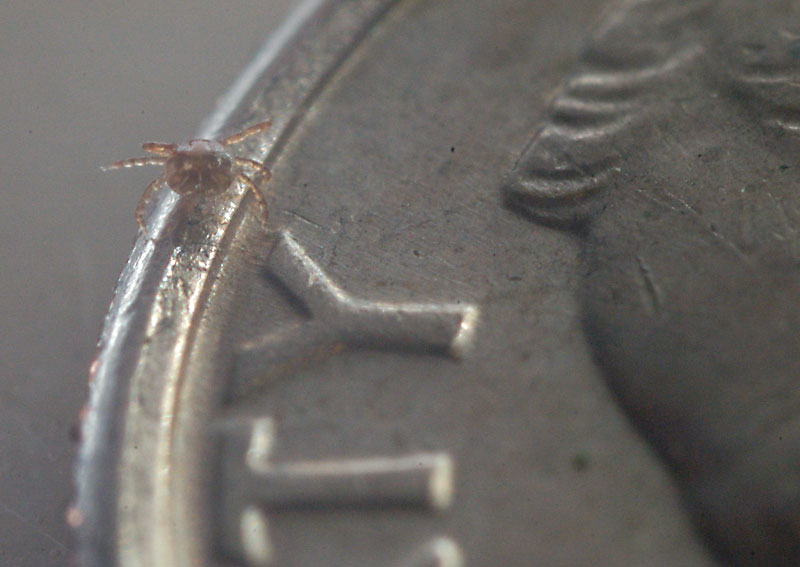
I know I just did an interesting animal post, but I decided to blog about these small creatures after receiving several bites on my feet and ankles during my recent romp with Ebon.

The numerous species of chigger are in the Family Trombiculidae.
Chigger bites will look a bit like pimples
If you have never run into chiggers before, then you are quite fortunate. These tiny arthropods are more closely related to spiders than insects, and are also called red bugs, harvest mites, berry bugs, and several other common names. Though I know them best as chiggers, most of the locals here in Georgia call them red bugs. Interestingly enough, though the adults of these bright red mites have the expected eight legs, the larvae have only six. Most species prefer areas covered in lots of vegetation that have a rather high amount of moisture. However, other species like it dry. The are usually only active during the spring and fall, but more temperate areas like where I live have them active all year round.

It's the larvae that do the biting, and boy do those bites itch like crazy! When the initial bite occurs, you won't even know it happens, but after some time you will feel a burning sensation, followed by severe itching. The bites of chiggers found in the United States aren't dangerous unless you scratch them too much and cause an infection, so something to calm the itch is a very good suggestion. Though many think they feed on blood, in fact they do not, instead ingesting tissue that is liquified using specialized saliva. Despite what many people assume, the larvae do not burrow into the skin. Instead, only the mouth-parts are inserted and thus the chigger is usually easily knocked off with the scratching that follows their bite. So, all of the home remedies that are supposedly meant to suffocate the burrowed creatures are pointless.

Luckily, applying bug spray that contains DEET will help keep the chiggers away. Certain types of clothing also helps, namely the general suggested dress for romps through the woods: tight-woven clothing covering as much skin as possible, with pants tucked into boots and sleeves and collars fitting close to the body. Products can also be applied to fabrics to help ward off chiggers. Also, it's helpful to know about whatever areas where you live are infested. When I was doing my undergraduate studies, we spent a lot of time trekking through heavy brush and my professors often warned us about where they knew chiggers would be found. Areas can be treated using certain pesticides or cutting down brush to control or eliminate these small creatures, but this isn't always practical.

Sources are Ohio State University, University of Florida, Missouri Department of Conservation, and PubMed Health. Images are from Wikimedia Commons under Creative Commons licenses: one, two.

Saturday, January 21, 2012

Interesting Animals: Binturong

A binturong (Arctictis binturong).
This species is also commonly known as the bearcat. It's rather easy to see where that name came from: a bear-like face, tufted ears, long tail. The binturong, however it is not very closely related to either species. It is classified in with the civets and genets, which are cat-like carnivores that are still distinctly different from the cats. It is native to forested areas of South Asia, and is currently a Vulnerable species. One fun fact about this species is their smell, which is very like the smell of buttered popcorn.

Though the binturong is arboreal (tree dwelling),  it does not swing and leap between trees as so many arboreal species do, but instead will descend to the ground and move between trees that way. They are also known as heavy scent-markers, frequently being observed rubbing their various scent glands onto whatever surface they may be in contact with. Males in particular will also use their own urine to scent mark, sometimes by soaking their own tails in it. The species does not seem to have any potential negative effects for humans. They are occasionally kept as pets and in some areas, they are eaten. Where they are native, they are very important to the local plant life due to their nature as a seed disperser.

Since the species is Vulnerable, there is concern over what may have caused the reduction in numbers. As is so often the case, loss of habitat and modifications of the habitat that does remain has been detrimental. They are also collected for their fur, meat, and also for the pet trade. There is likely some connect between these problems, namely that it is not unusual for trees to be cut down to capture animals seen as desirable for whatever reason. When they are hunted, their behavior does not do them any favors. The species is generally not fearful of people, and since they are active fairly often during daylight it can make them very easy to find.

Sources are Animal Diversity Web, the IUCN Red List, and the San Diego Zoo. Image is from Wikimedia Commons under a Creative Commons license. 

Monday, January 2, 2012

Interesting Animals: Chitons

A chiton showing the eight-part shell that signifies their classification into Class Polyplacophora ("many plate bearing").

I find these unusual molluscs to be extremely fascinating. Phylogenetic classification places them as basal molluscs, what would also be called a primitive type. As such, they may be the most like the soft-bodies animals from which all molluscs came. They are most commonly found in tidal areas, stuck fast to rocks. Their mantle girdles act like suction cups to attach them to the surface and conserve moisture while the tide is out. Their attachment can be so firm that they may only be removed with great effort. There are over six hundred species, all of which are marine and most of which live in what is known as the "rocky intertidal zone," where they will regularly be exposed to open air. However, some species live in quite deep water or in association with other living things.

The most obvious characteristic of chitons is the eight-part shell. Like all molluscs with an external shell, it is used for protection. In addition, the mantle may be armed to further protect the animal. Interestingly enough, chitons may have shell plates that are internal and/or reduced in size. These examples are more like worms in appearance than their fully plated cousins.

A chiton's underside, mouth to the left
When viewed from the underside, chitons are reminiscent of snails and other molluscan relatives. Hidden by the girdle are the gills and the muscular foot. One of the reasons it is important for them to clamp down to a rock when exposed to air is to keep their gills moist. Dry gills lose their ability to absorb oxygen, and thus can cause the animal to suffocate. Though they do have a head, it is minimal with only a mouth revealing the anterior end. As with all molluscs, chitons have a radula that is used for feeding. Specifically, these animals scrape their food from rocks, consuming algae and  whatever organisms they pick up.

Overall, chitons are not very significant to humans. Though eaten at one time by those who were native to the Pacific coast of North America, they are not any longer.

Sources are Animal Diversity Web and the University of California Museum of Paleontology. Images are from Wikimedia Commons under Creative Commons licenses: one, two.

Monday, December 12, 2011

Interesting Animals: Salps

A diver swims with a chain-like colony of salps

I love salps, and all of the other weird creatures out there with unexpected phylogenetic relationships. Salps are grouped in with Tunicates, or sea squirts as they are more commonly known. Salps and their relatives look rather a lot like jellyfish due to their soft, see-through bodies, but a closer examination shows numerous major differences. Where as jellies are very simple animals with few specialized tissues, salps are far more complex. In fact, as larvae they look remarkably like tadpoles. It is during the transition to adulthood that they loose their tail and other features and become specialized filter feeders. As hard as it may seem, larval traits such as a postanal tail, dorsal hollow nerve cord, notochord, and pharyngeal gill slits firmly sets these strange creatures into the Phylum Chordata. Chordata, of course, also includes such animals as fish, reptiles, birds, and mammals like us. However, salps are non-vertebrate chordates, and thus distinctly different from the fish, reptiles, birds, mammals, and other vertebrates. About fifty species of salps are known.

As adults, salps are quite efficient filter feeders, taking in water with one of the two siphons and expelling it through the other after filtering out food particles. They are usually found in colonies, and are able to reproduce either through sexual or asexual reproduction. Salps are able to swim by forcing water out of one of their siphons. Though they can be rather large in size, their free-floating, weak-swimming nature makes them plankton. In certain areas, salps can be so abundant that they become the second most commonly seen planktonic animals. Despite the fact that most people associate the term "plankton" with small living things, it is very possible for plankton to be a meter or more in length. By definition, this category encompasses any organism that is unable to swim against a strong current, which includes such things as jellyfish (including some truly massive species). Plankton that is over twenty millimeters in length is called megaplankton.

Sources are Woods Hole Oceanographic Institution and Biology of the Invertebrates. Image is from Wikimedia Commons under a Creative Commons license.

Thursday, November 24, 2011

Interesting Animals: C. elegans

One of the C. elegans roundworms.
Caenorhabditis elegans is one of the most commonly used research animals, especially when it comes to the world of genetics. In the wild, the species is very common and very harmless. The reason why it is so commonly used in research is due to one of its most unusual features: in the wild-type, hermaphroditic form, adults always have 959 cells. Unlike most animals, their is no variation in that number unless there is some underlying genetic issue or the individual is male. The small size and short generation time of these worms also makes them ideal, since at one millimeter they easily fit in a Petri dish and their life cycle is only three days. They also feed on the easy to cultivate Escherichia coli (among other things). Though there is no real common name for the species, in the research world it is simply called "the worm." The genome is rather small, so any changes in genes can be recognized and tracked fairly easily. In addition, gender in the species is controlled by X chromosomes, but not in the same way as in humans. XX individuals are hermaphrodites, and XO individuals are males. They also produce copious amounts of offspring, 300 when hermaphrodites mate, and even more when one mates with a male. So many aspects of C. elegans make it ideal for laboratory work.

The movement of C. elegans
Research that has been done on this animals varies greatly. Every cell has been tracked in detail from zygote (fertilized embryo) to adult. Mutants have been created so that researches can see how certain genes affect the number of cells in the adult and other characteristics. Their nerves have been studied so that a better understanding of neurological processes can be developed. Cell biology has been improved thanks to close examination of living worms. Breeding experiments have been done using the hermaphrodites and males of the species, which has led to the production of vast amounts of different genotypes and phenotypes. The genome has even been sequenced.  

C. elegans has become one of the model organism in the biology world, making its way into virtually every basic biology text. At this point, the vast knowledge base of these tiny worms is amazing. Also, for a humble worm, they are incredibly important to what is now understood about the living world. We owe a lot to them.

Sources are Animal Diversity Web and Worm Classroom. Images are from Wikimedia Commons under Creative Commons licenses: one, two.

Tuesday, November 15, 2011

Interesting Animals: Giant Isopod

These are some of the strangest looking animals I have ever seen. There's even a gallery at Flickr.com dedicated to this species.

Bathynomus giganteus, the largest of the isopods, is quite startlingly large.
Isopods are crustaceans, but they are not like the crustaceans that most people are familiar with. They lack the carapace that is seen in most crustaceans (such as lobsters and shrimp), and have a fully segmented body instead. They also have compound eyes that are not stalked and bodies that are flattened. Isopods are distributed all the way from the depths of the oceans to land, where numerous species are known by such common names as "wood lice" and "pill bugs."

B. giganteus next to a scale (in cm)
The giant isopod stands out as being one of a kind. The largest example of the species that has yet been found was over two feet in length. However, they are usually only one and a half feet in length. They are deep sea scavengers, feeding on whatever they can find in the cold, dark depths of the ocean. It is not uncommon for deep sea animals to be surprisingly large, and this species is no exception. Like pill bugs, the giant isopod can also curl into a ball for protection. The species is often described as such things as a "giant woodlouse," and it is a rather apt description due to the species' similarities to the terrestrial crustacean.

Here is a video of these strange creatures scavenging a tuna, narrated by the ever-great David Attenborough. Begins at 0:30.


Sources are Biology of the Invertebrates, Seapics.com, and Daily Mail. Images are from Wikimedia Commons and are copyright free: one, two.

Friday, November 4, 2011

Interesting Animals: Hyrax

For some reason, I thought I had already posted this.
A rock hyrax (Procavia capensis), one of several species of these unusual animals

The mammalian Order Hyracoidea includes only the several species of hyrax. They are small, weighing approximately four kilograms and being only between 30 and 55 centimeters in length. On first glance, most people would think that these animals are either rodents or very closely related to rodents. They even have one common name that heavily implies the relationship: rock rabbit. In fact the genus name Procavia implies that species is the ancestors to the cavy, also known as the guinea pig. This is, in fact, far from the case. The closest living relatives to the hyraxes are actually the elephants and sirenians (i.e. manatees and dugongs)! If you look closely at their feet in particular, you can see some of the resemblance. All modern phylogenetic trees confirm the relationship. This is one of my favorite examples of unexpected relationships in the animal world.

There are many convergent evolutionary traits seen between the hyraxes and rodents. Some of this can be seen when comparing the dentition. Hyrax species have incisors that are rather like those seen in rodents, and they also have diastema (i.e. gaps between teeth) in the same location as rodents. However, the incisors of the hyrax do not appear to be continuously growling like those of rodents (note the lack of tea-colored enamel and the more blunt overall shape). It is quite understandable that such assumptions were made.

These animals are foragers, feeding on various bits of plant life. In the rocky ears that the inhabit, they are even considered to be the dominant herbivore. The rock hyrax will use crevices in the rock as well as abandoned burrows for shelter. They have well-developed senses and are actually quite vocal little animals. Their social structure is that of a territorial male and up to seven females. They are also prey to virtually every local carnivore. For the rock hyrax, this includes eagles, lions, and African wild dogs, to just name a few. Despite this, the lifespan in the wild can be as long as twelve years.

Sources are Animal Diversity Web and the African Wildlife Foundation. Image is from Wikimedia Commons under a creative commons license.

Friday, October 14, 2011

Interesting Animals: Mola Mola


Mola mola is more commonly known as the ocean sunfish. This unusual looking fish is found in the Pacific, Indian, and Atlantic Oceans, as well as the Mediterranean in waters that are in the tropical to temperate range. Though usually found in open water, they will go into more shallow waters to make use of cleaner fishes. They are actually the largest of the bony fish, coming in at up to nearly 5000 pounds and over ten feet in length. Another unusual trait, this fish is scaleless and has rubbery, thick skin. Its body is flattened laterally.

The sunfish is also odd in its method of propulsion. While most fish use their caudal (tail) fin as their main means of propulsion, this species doesn't even have a caudal fin. It instead has what is called a "clavus" which it uses as more of a rudder. The dorsal and anal fins are enlarged,and are used to propel them using a sort of flapping motion. They will sometimes be seen swimming on their sides, and this form of propulsion makes this feat easier. They are known to undergo vertical migration, likely to follow their planktonic prey. The mola mola can sometimes be found basking at the surface of the water, which is believed to be a way for them to warm up after diving to deeper, colder water.

A mola mola caught in 1910
They feed mainly on soft, gelatinous plankton such as jellyfish, comb jellies, and salps, but will also eat other things. They are believed to have a great effect on the population of the various jellyfish. Predators of the mola mola include sharks and sea lions, and they are sometimes hunted by people. They are also often caught as bycatch  (i.e. all of the unwanted things caught in a fishing net) by commercial fishers. They are considered a delicacy in certain parts of Asia.

A lot is still unknown about this species.

Here is a video of this fascinating creature:


Source is Animal Diversity Web. Images are from Wikimedia commons and are copyright free: one, two.

Friday, September 30, 2011

Interesting Animals: Pangolin

A member of one of the several species of pangolin
The pangolin, also called the scaly anteater, is a quite unusual creature: appearing part armadillo, part anteater, and part sloth. The seven pangolin species are found in Africa (four species) and Asia (three species). Unfortunately, four of these species are endangered, including all of the Asiatic species. Like anteaters, the pangolin exclusively eats insects such as ants and termites, using their sturdy forelegs and heads to dig for them and their long tongues to collect them. Like most species that specialize in such tiny animals, the pangolin has no teeth. When threatened, these unusual animals will curl up into a ball for protection. Habitat varies by species, with some living in trees while others prefer the ground. They are normally nocturnal and solitary. The pangolin has poor eyesight, but good hearing and sense of smell. The plates on their body, which are used for defense and are actually fairly sharp, make up a significant portion of the animal's body weight.

The pangolin was once classified with the armadillos and anteaters, but they are actually rather distantly related and the similarities in appearance and behavior are most likely convergent. Now, pangolins are classified in Order Pholidota while armadillos, anteaters, and sloths have been grouped into Order Xenarthra.

Sources are the African Wildlife Foundation and the University of California Museum of Paleontology. Image is from Wikimedia Commons under a creative commons license.