Showing posts with label breed standards. Show all posts

Monday, July 9, 2012

Mismark Case Study: Cavalier King Charles Spaniel

According to the AKC, Cavaliers come in four allowable colors, three of which are seen here: Blenheim, tricolor, and ruby. Black and tan is not shown.
The Cavalier King Charles spaniel is a popular pet and is one of the largest of the breeds in the toy group. Though the breed comes in four colors, two are more commonly seen: Blenheim and tricolor. There are also several mismarks, some of which are due to breeding within the allowable breed colors:
  • Incorrect white
    • Too much white on the face of a Blenheim or tricolor
    • Any white on a ruby or black and tan
  • Ticking 
    • On a Blenheim or tricolor
  • Incorrect tan 
    • Seen on tricolors and black and tans 
  • Incomplete pigment 
    • Of the nose or eye-rims on a Blenheim or tricolor
  • Blue eyes 
    • Usually only seen on a Blenheim or tricolor
White on a black and tan
When it comes to incorrect white, both of the forms I describe are really to be expected when breeding for the allowable colors within the breed. The piebald gene (sp), which results in Blenheim and tricolor dogs, is recessive to the solid gene (S) on the Spotting locus. However, in most cases a dog who is heterozygous for these genes (Ssp) and thus carrying piebald will have some amount of white. This is often as little as a bit of white on the chest and/or toes, but this may extend up the chest and even result in some white on the face and tail. The problem is: according to the standard, no amount of white is allowable on ruby or black and tan dogs. This means it is unlikely that the solid dogs are bred to the piebald dogs, leading to color class breeding. This is problematic, as it basically creates breed within breeds, narrowing overall genetic diversity to two smaller pools, and thus raising the potential for problems that result from increased homozygosity. Also, only breeding solid dogs to other solid dogs will not eliminate white markings. It's far from uncommon for a genetically solid dog to end up with some white on their chest and/or toes. This is thanks to normal developmental variation in the womb.

Too much white, lacking pigment
In addition to the above, "incorrect" facial white on piebald dogs is also far from uncommon. Facial white is controlled by as-of-yet unknown modifiers. Selection can favor one form of facial white, but it's almost impossible to eliminate the ones that would be considered "undesirable." Since this is true, dogs with more or less than the preferred amount of white shouldn't be surprises. Also, since selection in Cavaliers favors dogs with rather a lot of facial white, this likely increases the likelihood of a dog being produced that has too much white. In relation to this, dogs with a lot of white on the face are far more likely to lack pigment of the nose or eye-rims, or to have one or more blue eyes. Since the standard favors dogs with so much white on the face, this makes it quite likely that these dogs will appear.

Heavy ticking, too much white
As for ticking, there is a bit of a conundrum in the breed. Some ticking is fine, and a lozenge between the ears, which may or may not be a large ticking spot, is preferred. But, if a dog has too many ticking spots, it's not allowed. So, it's likely that the dogs that are allowed are heterozygous for the ticking gene (Tt) and the dogs that would have too many spots are homozygous (TT). So, why allow ticking at all if you're only going to penalize dogs that have too many spots?

Incorrect tan on the face
Another mismark that is based on normal color variation in incorrect tan markings. Taking the standard as it is stated, any tan on the outside of the ears is not to be allowed and any tan between the marking above the eyes and on the cheeks would also be incorrect. However, these things are not uncommon in tan pointed dogs. This is another case of minor differences being enough to make a dog "undesirable."

All of the mismarks that are seen in the Cavalier King Charles spaniel are really rather minor things that are to be expected from normal canine color inheritance. As such, they are nothing more than silly aesthetic preferences and do not reflect on the quality of the dog. Since this breed is a very common pet and, indeed, bred to be a companion, temperament and health should be far more important than what the dog looks like. Looks should never take precedence over these other, far more important traits. As such, color standards are really rather silly things based on nothing more than minor aesthetic preferences of the few people that wrote the standard. As the differences I have mentioned have absolutely no effect on the quality of a dog, eliminating a dog from the gene pool simply because it does not fit the color standard is ridiculous. Also, as purebreds are bred in closed registries, dropping any dog from the pool of potential mates makes it quite possible, and indeed likely, that a negative loss of genetic diversity will result. Since the color standard has also lead to color class breeding in the Cavalier, this is even more problematic.

Images are from Wikimedia Commons and Flickr.com under Creative Commons licenses: one, two, three, four, five.

Sunday, July 1, 2012

Mismark Case Study: Gordon Setter

A Gordon setter in the breed's only acceptable color.
The Gordon setter is one of a small number of setter breeds, which also includes the English setter, Irish setter, and Irish red and white setter. Though the Gordon setter now only comes in one acceptable color, the breed's history included a number of other colors that are now considered to be mismarks. Part of why these colors are in the breed is due to its relationship with the other setters. So, what are these mismarks?
  • Incorrect tan markings
    • Dogs with more or less than than required in the standard
  • Liver
    • Inherited on the Brown locus, a dog must be bb to be liver
  • Red
    • Inherited on the Extension locus, a dog must be ee to be recessive red
  • Too much white
    • Inherited on the Spotting locus, a dog with a variety of genotypes can have too much white

Too much white
Looking at these mismarks, they are all recessively inherited except in dogs that are genetically solid but have too much residual white. All of theses colors were well known when the breed was young. Much like the Irish setter, the predominant color in the early years of the breed is actually not what you think it would be when looking at modern dogs. Gordons were once mostly tricolor with some dogs being solid black and tan, liver, or red, but the white markings and other colors fell out of favor and led to the production of the breed you see today.

This dog appears to be liver
The current breed standard for the Gordon only allows for black and tan dogs with specific tan markings. Dogs that are anything other than black and tan are disqualified and anything more than a small bit of white on the chest is not allowed. A dog with more or less than the required tan would be penalized, despite the fact that ten markings can vary greatly on dogs that are all genetically atat tan pointed. So far, it is known that there are modifiers that control this amount of tan, but it isn't known where they are or how they are inherited.

Too much tan
This is a case where color standard is based on, basically, fashion. What once was popular was no longer liked by those who wrote the breed standard, and thus those other colors faded into obscurity. However, since the colors are basically all recessively inherited, they continue to pop up on occasion in litters that are born today. These past decisions are really problematic when looking at the breed's history and what this holds for the future.

Too little tan
Since Gordon setters were originally hunting dogs, the main thing that they should be bred for is working ability. This was at least true of setters past. However, modern Gordons have a lot more emphasis placed on type and show potential. It remains true that Gordons were developed as working dogs and color has no affect on working ability. It also has no affect on health or temperament, which are both important to people who wish to have a happy life living with a dog, particularly if the dog is meant to be a pet. If breeders wish to emphasize the Gordon setter's place as a working breed and its ability to do field work, why should they place any emphasis on color?

Another major concern in the Gordon setter and any other breed is a loss of genetic diversity due to selective breeding. Since Gordons of only one color were favored, a lot of diversity was lost rather early on in the breed. Continued shunning of off-color dogs only drops more potential sources of genetic diversity from the breed and risks loss of some very good, sound individuals based on a silly cosmetic preference.

Sources are the American Kennel Club, Gordon Setter Club of New South Wales, and Gambit Gordon Setters. Images are from Wikimedia Commons or Flickr.com under Creative Commons licenses: one, two, three, four, five.

Saturday, June 16, 2012

Mismark Case Study: Boston Terrier

Boston terriers come in three acceptable colors: black, brindle, and seal, all with white.

This dog would have too little white
The Boston terrier is a breed that came from crossing a number of different breeds together. In its ancestry are such breeds as the French bulldog and bull and terriers types, crosses between bulldogs and terriers that are the ancestors of such modern breeds as the bull terrier and pit bull. The reason why modern Bostons are so small is that they have since been bred down in size from the original stock. This ancestry also explains all of the colors that pop up on occasion in the breed. What are these mismarks?

  • Too little white
    • Lacking the required white chest, muzzle and blaze between its eyes
  • Too much white
    • Excessive facial white or "splash white"
  • Any base color other than black, brindle, or seal 
    • Liver, blue, lilac, fawn, gold, or tan point
  • Not enough skin pigment
    • The nose must be completely black
  • Blue eyes
    • Even a touch of blue disqualifies

Too much white and a blue eye
To begin, let's look at variations in the amount of white on the dog. Facial white is forever a conundrum in the canine world. In every breed that had facial white, there is a great amount of variation. This variation is controlled by as-of-yet unknown modifiers and is likely polygenic and inherited mostly independent of the Spotting locus that controls body white. This is the issue with having a rather strict requirement for facial white: there is no real guarantee that your breed will always have the same exact amount. This is why in breeds like the Boston terrier, too much white on the face happens so often. Too little white also happens, but in the Boston this appears to be a more unusual occurrence.

A splash rescue
The "splash" white is completely different. Piebald and extreme white can both be sources of the splash pattern, and both are recessive alleles on the Spotting locus. Most Bostons express the Irish white phenotype, which can vary from the minimal markings required by the breed standard up to what's often called collared Irish, which has white extending all the way around the neck and prominent white on the legs. Irish white is dominant to both piebald and extreme white, and as such it's very possible for dogs who conform to the standard to carry these alleles. Though not always the case, it's possible that some of the heavily marked collared Irish dogs have as much white as they do thanks to the recessives they carry. Extreme white especially can cause a dog to have more white than it would otherwise have. Minimal piebald can also mimic collared Irish markings, and so it's possible the occasional minimal piebald may slip into the show ring.

As for the dogs with off-standard base colors, there are really quite a number of possibilities. Here's the full list of possible colors, what they're called in the breed and the genes that cause them. Wherever I say black, this is basically interchangeable with brindle and seal. All three colors are caused by the K-black locus, with brindle (kbr) being recessive to black (K) or seal (K, bad black, possibly recessive to regular black).

Masked fawn puppy
  • Sable/fawn 
    • Recessive to black on the K-black locus, allows the Agouti locus to show through: Ay- kk results in sable/fawn
    • Dog may or may not have a black mask and may be liver, blue, or lilac instead of black
  • Tricolor/tan points
    • Also on the Agouti locus: atat kk results in tan point; may be liver, blue, or lilac instead of black
Liver pigment

  • Non-black pigment that would otherwise be black
    • Liver/brown, recessive to black on the Brown locus: bb results in liver pigment
    • Blue/gray, recessive to black on the Dilution locus: dd results in blue pigment
    • Lilac/champagne, combination of the blue and liver genes: bb dd results in lilac
Recessive red

  • Gold/honey/cream/blonde
    • Caused by recessive red on the Extension locus: ee results in recessive red/clear red
    • This gene hides all black body pigment, so any of the above, including blue/liver/fawn, but skin and eyes can still be effected by the liver and blue genes

Liver pigment and too much white
The major thing to note about all of the above is that they're all recessive. Due to this fact, you won't know your dog is a carrier until it throws a mismark puppy. Even if you remove those mismark puppies from your breeding program, its siblings have a two-in-three chance of being carriers. Why is that? It comes down to basic genetics: mismark puppies can only show up in litters bred from carrier parents or those expressing the gene. If breeding from two carriers, the expected ratio in the puppies is 1:2:1. That is, about one-forth will be non-carriers, half of the litter will be carriers, and the last forth will express the recessive mismark. If you remove the mismarks, you're left with a ratio of 1:2, or one-third non-carriers, two-thirds carriers. This means there's a rather high chance of the gene persisting, particularly if a breeder then chooses to linebreed or do other forms of inbreeding. Inbreeding only increases the likelihood that the recessive mismark will appear. This is why so many breeds have persistent mismarks.

Two dogs, three blue eyes
The two mismarks that I haven't yet mentioned are blue eyes and noses lacking in pigment ("Dudley nose"). Both are disqualifications according to the standard, and both are natural consequences of breeding for dogs with lots of white. White around the nose makes it quite possible that a dog will end up with a pink spot on its nose, or even a completely pink nose. So, expecting all dogs to have a fully pigmented nose when you are breeding for prominent white markings is a bit silly. It's basically the same with blue eyes. Though they can be independently inherited, the more white a dog has, the more likely it is to have one or more blue eyes. If the white touches a corner of the eyes, this also increases the chances. This is why so many dogs with a lot of white on their face have one or more blue eyes. Since the Boston standard desires very prominent white, blue eyes shouldn't be a surprise.

Liver pigment
As with every dog, color should be the last thing a breeder should worry about. There are so many more important things that a breeder should be striving to produce, like dogs with even temperaments and ones that are healthy. By disallowing certain colors, especially ones that were perfectly acceptable at one point in the breed's history (like splash in Bostons), there's a very high likelihood that perfectly good, healthy dogs are being dropped from the breeding population for extremely superficial reasons. This does nothing but narrow the gene pool and damage the breed as a whole. However, this doesn't mean that one should purposefully breed for mismarks. On the contrary, breeding for recessive is always bad because it usually means inbreeding, and potentially very heavy inbreeding at that. Inbreeding in any form and by any name (such as linebreeding) is very bad as it narrows gene pools and makes it more likely that deleterious recessives pop up. This is why so many purebred dogs have inherited health problems. Color should not matter. Purebred dogs have enough problems.

Apparently, there are some people out there selling merle Bostons. This color has been introduced through mixing with another breed. Since merle has so many negatives, there is absolutely no good reason to out-cross to purposefully introduce merle into a breed. 

Images are from Wikimedia Commons or Flickr.com under Creative Commons licenses: one, two, three, five, six, seven, eight, nine, ten. Image four is copyright to Rescue Furdaddy on Flickr.com.

Tuesday, May 15, 2012

Mismark Case Study: French Bulldog

This is another post I had drafted up. Since there was such a long gap between case studies, I decided to post this one as well.

A French bulldog is one of the breed's acceptable colors: cream.
The French bulldog standard is actually rather confusing in its definition of what is a "correct" color and what is not. This is what it actually says:
Acceptable colors - All brindle, fawn, white, brindle and white, and any color except those which constitute disqualification. All colors are acceptable with the exception of solid black, mouse, liver, black and tan, black and white, and white with black, which are disqualifications. Black means black without a trace of brindle. - AKC French Bulldog Standard
So, what it basically says that brindle, fawn, white, and brindle and white are acceptable plus any other colors except those listed. Which basically means no other colors.  My assumption is that the "other acceptable colors" includes such things as red, cream, sable, fawn piebalds, and dogs with masks. However, those could for the most part be included under the heading of "fawn." It would make much more sense to simply list the acceptable and unacceptable colors without the need to get so pointlessly wordy. Even worse is their wording on what is and is not acceptable pigment intensity to the skin and eyes. Namely, eyes must be dark and noses black except on lightly colored dogs. So, basically blue and liver aren't allowed, but according to this wording, a cream dog such as the one above could have a liver nose and be considered acceptable according to the standard. Anyway, on to the mismarks:
  • Blue eyes
  • Tan point
  • Ticking
    • White seen on dogs should be free of ticking spots
  • Lack of stripes
    • All black dogs must have at least one visible brindle stripe
  • Non-black pigment
    • Liver
    • "Mouse" (apparently blue and Isabella/fawn)
This Frenchie has blue eyes
The exclusion of blue eyes in any standard that allows piebald dogs is...problematic. This is due to the fact that it is far from uncommon for piebald dogs to end up with blue eyes, particularly if one of their eyes is partly or completely surrounded by white. Dogs that are extreme white (aka extreme white piebald) are even more likely to have one or two blue eyes since the gene greatly increases the likelihood that the dog will have little to no white on its face. Both genes can and do occur in the breed quite frequently.

A black and tan dog
Tan point is quite unusual in the breed, but does pop up on occasion. Since it is a recessive gene, it can potentially be hidden under a wide variety of colors. Sable is dominant to tan point on the Agouti locus, and thus it is possible that sable dogs may carry the gene. Recessive red, which is seen in the breed, can hide every other color, including black and tan. It's also possible that some of the dogs identified as "black" or very heavy brindles could actually be tan point. This would be due to the layering you get between the Agouti locus (and thus tan point) and the black K locus (and thus brindle). Heavy brindle markings would make it nearly impossible to see the crisp tan markings that are present in the dog at left and would instead cause a dog to have few, if any, tan stripes visible on the legs.

This puppy has ticking
Ticking, though not addressed in the official standard, is seriously frowned upon by breeders, showers, and exhibitors. Ticking is caused by a dominant gene that is only visible on a dog with white markings. As such, any solid dog that has a copy of the gene is indistinguishable from solid dogs that don't. If a solid dog that carries piebald is crosses with a piebald or another carrier and that solid dog has a copy of the ticking gene, you would get surprise ticked puppies. Since it isn't even mentioned in the standard, I don't know why it would be frowned upon in the first place since "all other colors are acceptable."

A possible black Frenchie
The lack of stripes thing is also a bit odd, particularly when it comes to the preferences that are seen within the breed. Among the brindles, those that are mostly black are preferred. So, basically the fewer the stripes the better. Yet a solid black dog isn't okay? To be allowable, there has to be at least one tan stripe visible on an otherwise black dog. Having a single tan mark means the dog is basically black.

A black and white Frenchie
Moving beyond my earlier point about dark brindle and the tan point gene, piebald throws a bit of a wrench into the works. Since the preference is for dark brindles, the more white a dog has, the more likely that what few tan stripes it may have are hidden by that white. I would suspect that there are more French bulldogs that are disqualified for being black that have white markings than those that do not. I would also say that most people that are outside of the French bulldog breed would look at a lot of the show dogs that are out there and call them black. Even if some of the dogs that are disqualified for being black are genetically black, it's still quite possible that their appearance could be a surprise. Since recessive red is seen in the breed, it's quite possible that some of the recessive red dogs out there are hiding the dominant black gene.

It is also quite possible that black in French bulldogs is actually recessive black (which is on the Agouti locus), in which case any dog could be carrying the gene. If the right two dogs come together, then a surprise black could appear. The only gene that would prevent a dog with two copies of the recessive black gene from being visibly black would be the recessive red gene.

A liver Frenchie
A blue puppy
Finally, there is the disqualification of dogs with pigment other than black. Both the liver gene and the blue gene are recessive, and thus can be carried by practically any dog. The "mouse" color that is mentioned in the standard appears to refer to both blue dogs and dogs that are expressing both blue and liver at the same time, which is in other breeds known by such names as grey, fawn, Isabella, lavender, and lilac. However, the lilac coloration is seen least often of the three due to the need of the dog being homozygous recessive for both the liver and blue genes. As such, it's quite possible that "mouse" refers only to blue and the liver+blue lilac is completely ignored by the standard. This is what is implied by the French Bulldog Club of America. This amuses me somewhat since lilac can appear quite similar to fawn in color and since the standard allows for light pigment in light colored dogs, it's possible that a lilac could be considered acceptable.

A blue masked fawn
Anyway, such things simply distract from my overarching point. Except for a small possibility of blue dilution alopecia, there is nothing health-wise that would give a reason behind the exclusion of any of these colors from the standard. Thus, there really isn't any reason to exclude any of these "mismark" colors. The French bulldog is a companion breed, and as such arguments cannot be made for its working ability. However, color doesn't affect a dog's temperament, which is the biggest concern in a breed that is meant to be a companion.

Health in the breed is of even greater concern. The French bulldog has a number of issues, including serious breathing problems and a large number of their dogs being unable to give birth naturally. While these are caused by selection for short faces, large heads, and small hips, other problems are caused by a lack of genetic diversity in the breed. This list includes vertebral issues, luxating patella, and allergies. The vast majority of such issues are inherited and the reason why they become common in purebreds is due to selection and breeding methods. Heavy selection narrows genetic diversity by dropping dogs out of the gene pool entirely. By selecting for color, dogs who may be very healthy are being removed from a population due to a silly aesthetic reason. This has the potential of being very problematic for the breed.

Sources are the American Kennel Club, French Bulldog Club of America, Absolut Bullmarket French Bulldogs, and D'Accord Frenchies. Images are from Wikimedia Commons and Flickr.com under Creative Commons licenses: one, two, three, four, five, six, seven, eight, nine.

Monday, May 14, 2012

Mismark Case Study: Shar-pei

Thanks to the new Blogger I wrote this post a while ago, but forgot about it after it was buried under a number of other posts. I used to keep my unpublished posts always visible, so it's taking a little time to get used to.

A show dog in perhaps the most commonly seen color in the breed: red. The standard allows all shades of red to include cream, black, blue, liver/chocolate/brown, Isabella/lilac/fawn, and sable.
A bone mouth shar-pei
To the Western world, our knowledge of this rather unusual looking breed is usually restricted to the type seen in the show dog above. However, a number of traits can vary greatly. Overall, the breed can be split into two major types: meat mouth and bone mouth. Meat mouth dogs are like the one above: heavily wrinkled with a puffy muzzle and lost of excess tissue overall. In contrast are the bone mouth dogs, considered to be a better representation of what the breed once was, which has far less wrinkle and less exaggerated tissue overall.

Another point of variation that many people aren't aware of are the coat variations and color variations. There are three coat types: horse, brush, and bear, with bear being disallowed by the standard. In addition, there are a wide variety of colors. The vast majority are acceptable, but a few are not. Here are the mismarks:
  • A non-solid color other than sable 
    • Flowered (aka piebald, parti-color, spotted)
    • Brindle
    • Black and tan
  • Albino

Though these are all mentioned in the standard, some are far more common than others. Albino, for example, may not even be present in the breed, let alone dogs in general. If it is, it's likely to be nearly indistinguishable from very pale cream dogs with skin diluted by both the liver and blue genes. If the gene is present, it's a simple recessive for which carriers cannot be easily distinguishable from non-carriers. Brindle and black and tan are quite unusual, but do still occur on occasion. Brindle is dominant to non-black/brindle (aka sable), but would be hidden by dominant black and recessive red. Black, though on the same locus, is dominant over brindle. Recessive red hides any and all black pigment that would have otherwise been expressed. Both of these genes are known to occur in the breed. Black and tan, in contrast, can be hidden by basically every other color seen in the breed. It's recessive to sable as well as hidden by dominant black and recessive red. Since all of these things are true, it makes it quite likely that the genes will never disappear from the population. Instead, they will remain hidden until the right cross causes the color to pop up.

Flowered liver
Flowered, by far, is the most common and well known of the shar-pei mismarks. It's caused by a couple of recessive genes: piebald and extreme white. The acceptable colorations according to the standard are all genetically solid. However, considering how common the flowered coloration is, quite a number of these dogs also carry a copy of either the piebald or extreme white genes. When the right two dogs come together, they will produce puppies with white.

Flowered red
I have also found evidence for the occasional dog with a copy of the Irish white gene, which produces the marking pattern most often associated with such breeds as the border collie. Some shar-pei breeders do not consider this coloration part of the "flowered" term. However, since the coloration is also a mismark for the same reason as the dogs with more white, I prefer placing them in the same category. It also appears that a very large portion of the flowered shar-peis you will find are also ticked. As such, the breed as a whole likely has quite a number of individuals that are genetically ticked, but this can't be seen due to a lack of white markings.

Flowered black
The reason why flowered dogs pop up so frequently is likely due to the breed's history as part of the dog fancy. Like so many breeds, only a small number of dogs were used in the creation of the lines that continue to be bred today in countries like the United States. According to analysis by one breeder, due to the small gene pool basically every single shar-pei that exists today is related to a flowered dog. This makes it rather likely that they will themselves carry the gene. In fact, it's estimated that one third of the population are carriers. The color remains fairly controversial, partly since the reasons for its exclusion from the standard are rather ambiguous.

Flowered red with a blue mask
All in all, there really is no reason that flowered dogs should be considered unacceptable in the shar-pei breed. One of the biggest reasons to allow the color comes down to genetic diversity. Shar-peis suffer from a startlingly large number of inherited diseases that have come from their small founding population and selection against certain colors and characteristics and for the exaggerated, wrinkled type that is so well known today. It's really quite amazing. Since this is such an issue, and so common at that, genetic diversity if precious. It's likely that there have been many flowered dogs who are far healthier than some of the dogs that are ancestors of the dogs you see in shows today. It's unfortunate that a silly aesthetic preference has led to the irreplaceable loss of genetic diversity. In the shar-pei, out-crosses could go a long way in trying to alleviate these genetic issues, and such groups as bone mouth shar peis and mismarked meat mouth shar peis could be very helpful additions to the gene pool.

Sources are American Kennel Club, Chinese Shar-Pei Club of America, University of Saskatchewan, Royal Shar-Pei, and Jewel's Shar-Pei. Images are from Wikimedia Commons or Flickr.com and are under Creative Commons licenses or are copyright free: one, two, three, four, five, six.

Friday, March 2, 2012

Mismark Case Study: Shiba Inu

I got a suggestion recently from MC over at The House of Two Bows to discuss the Shiba Inu mismarks, especially the cream coloration. So, here we go.

Two Shiba Inus is the breed's most commonly seen color: red. Image is from Wikimedia Commons under a Creative Commons license.

Red sesame
Black and tan
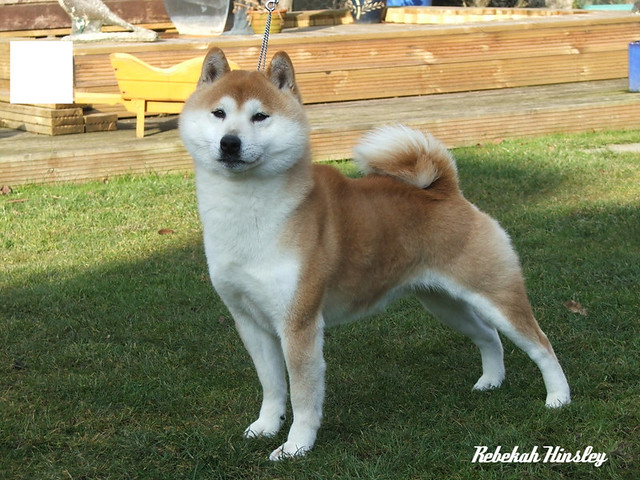
 The Shiba Inu is a breed originating in Japan and is a popular pet. Though the breed is most commonly seen in red, allowable colors also include black and tan and red sesame.

As with so many Asian breeds, Shibas have what is known as urajiro: pale points in a similar orientation to those seen in tan pointed dogs. Urajiro is not controlled by the same gene, though (which is why the breed can be black and tan with urajiro), and is either a simple recessive or a polygenic recessive. There is quite a bit of support for the polygenic theory because the intensity of the urajiro can vary so much. As with so many purebreds, Shibas have some mismarks:

  • Cream/white
    • Very pale recessive red
  • Pinto
    • Piebald white

This Shiba is a cream mismark
Cream is by far the most commonly seen mismark in the breed. It's caused by the same genes that cause white German shepherds. This color is a form of red that has just been very diluted. Characteristically, this means that the dog will usually not be white, but instead a shaded cream, often with red-tipped ears. Since it is a sort of recessive red, there will be no black hairs to be found on the dog. These genes also don't have any potential negative affects on the dog's health, unlike other forms of "white," such as albino, double merle, harlequin, and extreme white piebald. The only potential for health issues in dogs of this color would come from inbreeding which, since the color is recessive, is a common technique used by breeders who purposefully breed creams for profit. However, if a cream randomly pops up in a litter it will be no more likely to develop some sort of health issue than its siblings.

Pinto markings are also found in the breed, but seem to be far less common. It is far from unusual to see a Shiba Inu with a white paw or two and/or white chest, so there are several white spotting genes seen. Dogs with a bit of white, or even those that have basically none, can quite possibly carry the piebald gene that causes pinto. So, if you breed the right two dogs together, a pinto or two will pop up.

Another cream Shiba Inu
Though the Shiba Inu was once a dog used for hunting, now it is almost exclusively a companion animal. I have not found a single good argument as to why the colors continue to be excluded from the standard. Unlike some standards that exclude a color because of known common health issues that are linked to the genetics of the color itself, this is one of those cases where there doesn't seem to be any good reason to disallow the mismarks. Also, any attempts to breed them out really won't work because, if you remove all creams and pintos from the breeding population, you will still have dogs (including 2/3 of the siblings of the mismarks) who still carry the recessives. Any inbreeding that occurs will only make it more likely for the mismarks to show up. Even without close inbreeding, the occasional mismark will still pop up. In addition, by removing dogs from a closed population simply because they are the "wrong" color, precious genetic diversity is being removed for no good reason. In a closed population, genetic diversity is of serious concern because there is only so much to go around. Since the pedigree dog world is so against adding new genetic diversity by out-crossing to other breeds, what diversity there is needs to be maintained as much as possible or things do not bode well for a closed registry system.

Tuesday, February 21, 2012

Mismark Case Study: Doberman Pinscher

Doberman pinschers in the breed's most commonly seen color: black and rust. Image from Flickr.com under a Creative Commons license.
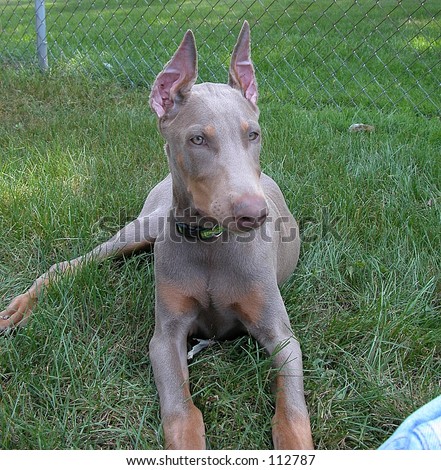
Dobermans, to most people, come in one color: black and rust. However, standards for registries such as the AKC allow four: black, liver (red), blue, and fawn (Isabella), all with rust/tan markings. Anything else is considered a mismark. The mismarks include:
  • Too much white
    • Anything more than a small spot on the chest
  • Not enough tan
    • If any of the normal tan/rust markings are not present
  • Solid colors
  • Albino (white)
    • Appears as cream with white points
A Doberman with too much white
Though the reason why some of these colors are not allowed makes sense, the majority still seem odd to exclude. To begin, let's look at too much white. By the nature of normal canine development in the uterus, even dogs that are genetically solid in color will sometimes end up with white on the chest and/or toes. This can potentially be a fairly large amount of white. Dobermans with a white spot up to half of an inch square are considered acceptable, but as soon as a dog has a spot larger than that or has white on the toes it is unacceptable.

This Doberman is missing some tan
Next comes not enough tan. Normally, tan pointed dogs will have tan in the following places: above the eyes, on the muzzle to the cheeks and throat, the chest, under the tail and all four legs. It is not uncommon for a dog with tan points to end up, for whatever reason, with one or more of these missing. The missing tan as a mismark isn't exactly explicitly mentioned in the standard, however since all of the previously mentioned locations for the tan are outlined in the standard, it can easily be assumed that too little tan isn't allowed. Not to mention the fact that you can't really find a Doberman in the show ring that is missing any of the required tan/rust.

Solid colors in the breed are really quite unusual. However, that doesn't mean they don't exist. The occasional solid red Doberman is born, and the origin of the color goes back to the use of such breeds as the German pinscher in the Doberman's creation. German pinschers are known for coming in two forms of solid red: stag red and clear red. Stag red is caused by the sable gene while clear red is caused by the recessive red gene. While Dobermans are fixed for the tan point gene and thus cannot be sable, it is very possible for some Dobermans to carry the recessive red gene. Clearly, some do because some solid reds have been born. Since the gene is recessive, it cannot really be bred out unless genetic testing is done, and, honestly, why do that? Eliminating all dog carrying recessive red from the gene pool would only decrease genetic diversity and potentially cause problems.

This Doberman is white
Probably the most controversial color in the breed is white. White is caused by a form of albinism that turns the black-based hairs (black, blue, liver, or fawn) to cream and the red hairs to white. The major reasons behind the controversy are the health issues that are so common in these white dogs. Not only are they prone to skin issues due to the albino gene, but heavy inbreeding involved in producing white dogs has lead to even more health issues. To me, it's not the color that is inherently wrong, but the breeding practices involved in the perpetuation of the color. The recessive white gene originates from a single bitch, and as such extremely heavy inbreeding was required to create more than the occasional white dog. This is why white Dobermans have so many health problems: any health issues that already occurred in the lines were compounded when the inbreeding happened. To me, the white gene could have better connotations today if people stopped breeding specifically for white, which could lead to the occasional white popping up, but those occasional dogs would likely have far better health than the whites produced today.

This fawn Doberman has dilution alopecia
Doberman pinscher standards in some other countries also list blue and fawn as colors that are not allowed, and there is a fairly good reason for this. In the breed, a condition known as color dilution alopecia or blue dilution alopecia is exceedingly common in, as the name implies, dogs expressing the blue dilution gene. As a result, some registries banned the showing of blue (dilute black) and fawn (dilute liver) dogs.

All in all, the Doberman pinscher was originally meant to be a working breed. In a working breed, capability to do the job is far more important than looks. As such, why does it matter if a dog has two inches of white on its chest? A dog needs to be sound more-so than anything else to be able to do the sort of jobs that Dobermans were first bred for. Also, now most Dobermans are not used as working dogs. Most end up being pets, which means that temperament and health should be the first concerns of every Doberman breeder. However, if these breeders also want to maintain the idea of the Doberman as a working breed, why should color, of all things, matter?

Sunday, February 5, 2012

Mismark Case Study: Boxer

These three boxers shows some of the color variation seen in the breed. Image is from Flickr.com under a Creative Commons license.
The AKC boxer breed standard allows for four color variants: classic fawn, flashy fawn, classic brindle, and flashy brindle. Classic boxers are also sometimes called "plain" due to the minimal amount of white seen on the dog. Flashy dogs have "flash," or prominent white markings, and dogs with flash are overwhelmingly preferred in the show ring. Here are the mismarks in the breed:

  • Too much white
    • Over 1/3 of the dog is white, usually where the dog is mostly or completely white
    • Dogs who are white except for a small colored patch are known as "checked"
  • Solid black (either classic or flashy)
    • Heavy brindle is okay, but fawn must be seen somewhere in the coat
  • No mask
    • The mask is considered "vital" for the "proper boxer expression"
  • Lack of skin pigment
    • Either of the eye rims/haws or nose

This boxer is a checked white mismark
Plain dogs are genetically solid, which explains the small amount of white. Flashy dogs, though expressing what is to be expected from dogs who are homozygous for Irish white markings, are heterozygotes, having one copy of the solid gene and one copy of the extreme white gene. This is where white boxers come from. Breeding two flashy dogs together leads to a one in four chance of producing a homozygous extreme white dog. This is why so many boxer breeders advocate only classic/classic and classic/flashy matings, despite the fact that a classic/white mating would produce an entire litter of the preferred flashy phenotype. The white puppies were once culled for being born the "wrong color," and as such for quite some time the color was rather obscure and considered incredibly rare. However, the color is far from rare. This is partly thanks to that preference for flashy markings in the show ring.

This boxer is a white mismark
On top of that, the white coloration was quite prevalent in the breed's foundation stock and was once perfectly acceptable. It only fell out of favor when the breed began to be used more often as guard dogs, since the white coloration made the dog more visible in the dark. Since the breed is now rarely if ever used for this purpose, it seems silly to continue to exclude them from the standard for a reason that is no longer relevant. Also, since the current preferred appearance among the dog show crowd is flashy markings, arguing that the tradition of a guard dog should be upheld holds no water. Flash would also make a dog more visible in the dark when compared to a dog with little to no white. In addition, narrowing the amount of available pairings due to color restrictions and movements to avoid white puppies alltogether can easily cause a loss of genetic diversity and all of the negative health issues that can come from that. Breeding for health and temperament should always be the top priorities in dog breeding since the majority of the dogs bred end up going to pet homes. Color should be one of the last factors that come into play.

This boxer is a black mismark.
Black boxers seem to be the new trend in the breed. If you search around online for boxer puppies, some of the first sites you will come across advertise black puppies, sometimes referred to as "sealed brindle." Brindle is very common in the breed, including very heavy and "reverse" brindles. However, the brindle dogs all have at least some fawn stripes. It is difficult to say where the black coloration has come from. It could be recessive black that appeared very rarely in the breed but has since been bred for by selfish breeders wanting to profit off the selling of the unusual. The color could have also come from an outcross to a breed that resembles the boxer and where black is quite known, such as the American bulldog or a pitbull type. Some of the breeders who sell black dogs call them "sealed brindle," saying that it's as if the stripes have been sealed together. They sell the dogs at exorbitant prices, usually significantly more than their non-black siblings. As I keep emphasizing in these mismark case studies, color shouldn't matter. As such, any breeder who is charging significantly more for a dog for color reasons is likely not a very honest or trustworthy breeder.

As for the last two mismarks, they seem to be the most unusual. The mask seems to be fixed or nearly fixed in the breed. Since the masking gene is dominant, it is quite possible that some boxers may very well be heterozygous for the gene. This would make it very possible for a maskless boxer to be  produced if the right two dogs are bred together. As for lack of pigment, it is far from unheard of for a dog with white markings to have a loss of pigmentation to the skin as well as the fur. It seems that most boxers are born with a pink nose, which is also normal for dogs with white markings. Though most puppies will grow up to have a fully pigmented nose, it is very possible for pink skin to be left.

Friday, January 27, 2012

Mismark Case Study: Pembroke Welsh Corgi

A Pembroke Welsh corgi with a tail in the most commonly seen color: red and white. Image is from Wikimedia Commons under a Creative Commons license.
The Pembroke Welsh corgi is a herding breed that is a favorite of the Queen of England. It comes in far fewer colors than its cousin, the Cardigan. It also comes in several mismarks. The breed standard only allows for red, sable, and black and tan, all of which may or may not come with white markings. Here are the mismarks seen in the breed:
  • Too much white
    • Dogs with white that crosses into the main body or onto the ears
  • Whitelies
    • Dogs that are mostly white
  • Bluies 
    • Dilute dogs: instead of black, the coat is gray/blue
  • Black without tan points
    • Though mentioned in the standard, it may not be present in the breed
  • Blue eyes
    • Possible thanks to white on the head or independent genes
This corgi has too much white
As is so often the case all of the mismarks listed (except black) are caused by recessive genes. Since the breed is most often seen with fairly heavy Irish white markings, there is a fair possibility that dogs expressing this phenotype may have very different genotypes. For example, a copy of the solid gene plus a copy of the extreme white gene will produce a dog with Irish white markings. This is well known in boxers, and may be quite possible in the corgis. If two of these dogs were bred together, a "whitelie" would be inevitable.The same is true of mismark dogs that have too much white, but too little white to be considered a whitelie.

This corgi is a bluie
The blue dilution is a purely recessive gene. You have to have two dogs who carry the gene to produce a dog with blue coloration. However, since it is recessive it is basically impossible to breed the color out, since half of the puppies from any litter that produces a "bluie" will likely carry the blue gene. If line-breeding or other forms of inbreeding are done in the future, then more bluies are very likely to show up. In addition, trying to breed out a recessive gene is truly a pointless endeavor since doing so would cause a great reduction in the number of dogs available for breeding in a closed population.

This corgi has too much white
As I have been saying with all of these case studies, breeding for color is honestly the last thing that a breeder should be doing. A dog with a white ear will not be any less healthy than a dog with a red ear or a black ear, and the dog with the white ear is being penalized for a mere silly cosmetic difference. In addition, purebreds are bred in closed registries and as such genetic diversity is a serious concern. By eliminating dogs from a gene pool simply because their color is not what is considered "ideal," genetic diversity is being dropped for a pointless cosmetic reason. In addition, If corgi breeders want to continue with insisting that their breed is a capable herder, why bother with color? Color will make no difference whatsoever when it comes to the dog's ability to herd. A blue dog will be able to herd just a well as a black one. However, the mismarks continue to be penalized and kicked out of shows.