Showing posts with label invasive. Show all posts

Thursday, August 25, 2011

Invasive Species: Coypu

A coypu or nutria (Myocastor coypus)
This species goes by many names, the most well-known being the nutria. They are a semi-aquatic rodent native to South America and they have been introduced to all sorts of places, including areas of North America, Europe, Africa, and Asia.

They are considered a serious problem species, with their major impacts involving erosion and destruction of dykes through burrowing and feeding on rhizomes, which are horizontal stems used to propagate species of grass. I large numbers, they can also reduce a marsh to nothing but an open stretch of water, putting a great number of marsh species at risk. They will also destroy crops.

The coypu is used as a source of meat and fur, and you can find the meat online, complete with recipes and meal suggestions. Management methods remain trapping and shooting, and a bounty system is set up in certain areas. Several states have managed to eradicate them from their area. Interestingly enough, the World Wildlife Fund opposed eradication attempts in Sicily. I wonder what their reasoning was?

The nutria is on the list of 100 World's Worst Invasives at #60.

Tuesday, August 9, 2011

Invasive Species: Cat

Felis catus, a popular pet. This one is feral.

Yep, the common house cat is an invasive species. You may ask, "how so?" Well, cats are actually incredibly destructive creatures because they hunt and kill wildlife. So, every feral cat and every domestic cat that is either kept outside or allowed outside puts many local species in great danger. These cats have helped lead to the decline or possibly even the extinction of many species. Cats are now on the list of 100 World's Worst Invasives at #38. The similarly sized wildcat species of Africa, Europe, and Asia are not included in this, even though the domestic cat is believed to have been domesticated from the African wildcats. 

A sparrow that died by this pet cat's jaws
Introduction was either caused by shipping traffic, as ships often kept cats to keep the rat populations down, or through pets. Many people would bring their pet cat to a new location and then either leave it behind or let the offspring go free. Feral cats are a serious issue in areas such as Australia, where they have a major impact on such species as the red-tailed cockatoo (Calyptorhynchus magnificus) and burrowing bettong (Bettongia lesueur). Their impact is greatest on islands, where species have often adapted to life where there are no natural predators. Many areas will have feral cat colonies, including my neighborhood and the campus where I earned my Bachelors degree.

If you have a cat, there are several common suggestions to help protect wildlife, which include having the cat wear a bell and keeping it in at night. However, studies have mixed results as to whether these are effective methods. When it comes to feral cats, management methods are quite different, and are most aggressive where they pose the greatest danger to native species.

The danger to wildlife is part of the reason why the cats I currently live with are not allowed outside at all. Ginny was a feral-born cat and she would do anything to avoid being outside ever again. Here's another reason to never let your cat outside: indoor cats generally live between fifteen and eighteen years. Outdoor cats, on the other hand, only live an average of less than three years. When we adopted Ginny, she was skinny, very sick, and her growth was stunted. In my opinion, just as you should never feed wildlife you should never feed feral animals either. It makes their population explode, they lose their fear of people, and they become dependent on the food. This can lead to a lot of suffering as well as potential danger to people if the food supply stops.

Images are from Wikimedia Commons under creative commons licenses: one, two

Monday, August 1, 2011

Invasive Species: Asian longhorned beetle

An Asian longhorned beetle (Anoplophora glabripennis), also known as the ALB or starry sky beetle

These beautiful insects are not only one of the 100 World's Worst Invasives, but they are in fact in the top ten, listed as #7. The term "longhorned" is a bit of a misnomer as these beetles have long antennae rather than projections from their carapace.

This beetle is native to Asian countries such as Japan and China. Believed to have been introduced to New York in the 1980's and discovered in 1996, it is invasive in areas of Canada and the United States. It is currently restricted to urban areas, where it will attack hardwood trees. Over a period of three to five years, an infested tree will slowly die. About 30-35% of trees in these areas are at risk, and if the population of beetles is not contained it could cause a loss of 1.2 billion trees, a value estimated to be $669 billion. If the beetles spread to forest areas, 71 billion trees could be lost that value in at more than $2 trillion.

This beetle is showing off its characteristic antennae
These beetles have been intercepted in numerous Europen countries, and as such they have not as of yet become a problem there. Over $800 million has been spent trying to eradicate the beetles. The eradication measures are rather extensive, including detailed inspections to determine the extent of an infestation. Infested trees are destroyed as well as all high-risk trees within 400 meters of infected trees and all high-risk trees within a further 400 meters are also destroyed or treated with a pesticide known to be effective against adult beetles. 

Images are from Wikimedia Commons and are either copyright free or under a creative commons license: one, two

Saturday, July 23, 2011

Invasive Species: Cattle Plague

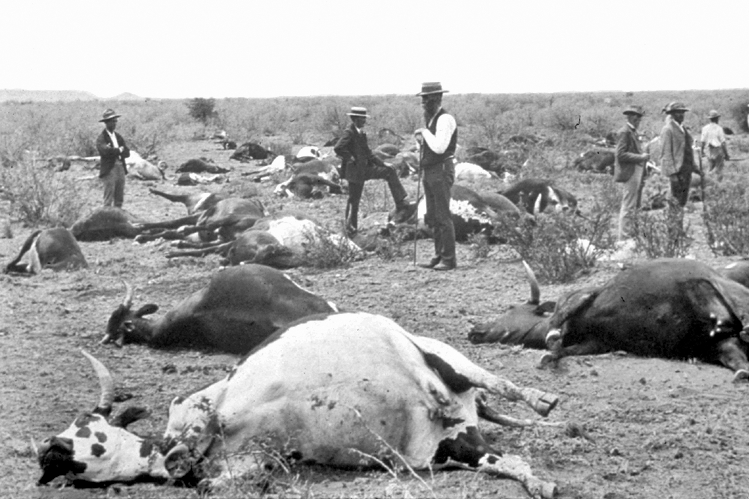
These animals died from cattle plague in 1896

Also known as the Rinderpest virus, this is one of the few micro-organisms on the 100 World's Worst Invasives list and was declared eradicated only last month after a world-wide campaign to be rid of the disease. It is now the second disease to ever be successfully eradicated, after smallpox.

A highly infectious virus, it affects numerous other animals like sheep, pigs, and many species of wildlife, though it is only truly devastating in cattle, buffalo, and yaks. It could easily wipe out a herd in an amazingly short period of time as the mortality rate in cattle is incredibly high, approaching 100% in some cases. Luckily, this is now one less thing to worry about for cattle herders that depends so heavily on their animals.

Rinderpest virus micrograph
The last known case of cattle plague was in 2001, but because it can be carried by wildlife it took several years before they were sure the virus was truly gone.  Like smallpox, Rinderpest now only exists in a small number of laboratory samples.

Rinderpest was listed on the 100 World's Worst Invasives as #81, though it is likely that it will be soon removed from the list. 

Images are from Wikimedia Commons under creative commons licenses: one, two

Thursday, July 14, 2011

Invasive Species: Cane Toad

Cane toad (Rhinella marina)

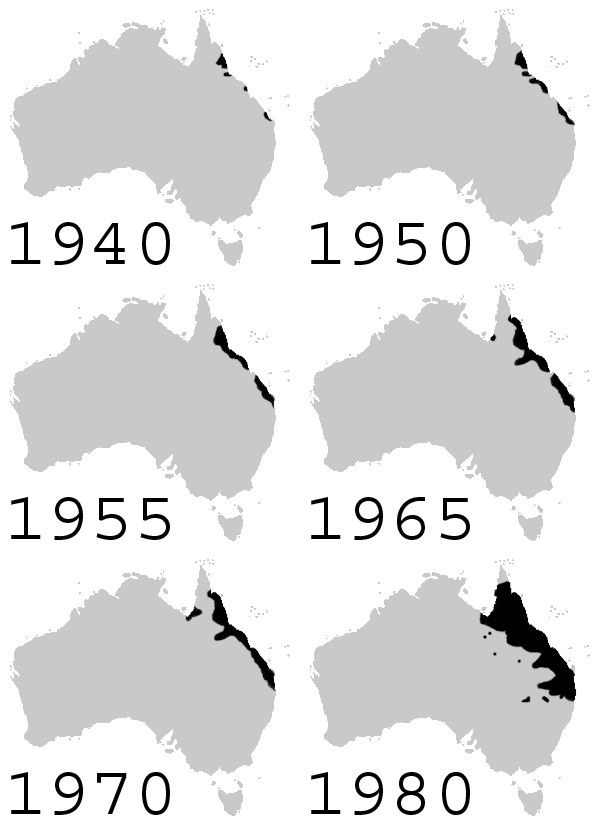
History of cane toad range in Australia
I'm sure most of you are already familiar with this one. It is wreaking havoc across Australia and has also been introduced to numerous other parts of the world. They were initially introduced to these areas in an attempt to control pests that were damaging important cash crops such as sugarcane. Needless to say, things didn't exactly go as planned. They are native to Mexico (extending into parts of Texas) and Central and South America.

Cane toads eat practically anything they can get their mouth around and excrete a toxin from the gland behind their eyes (parotoid gland) that causes illness or even death in those that touch it. Because of this, these toads pose a serious danger to all native wildlife as well as humans and domestic animals. Human deaths are known to happen after ingesting the toads or their eggs. There is still research being done into the best way to reduce the population numbers, with hopes for a successful biological control.

Cane toads are listed on the 100 World's Worst Invasives as #16.


Images are from Wikimedia Commons under Creative Commons licenses: one, two

Monday, July 4, 2011

Invasive Species: Kudzu

I know I've been doing these on animals, but I just have to include other invasive species too. If you would rather not read about a plant, I understand. Anyway:

Kudzu (Pueraria montana var. lobata) in South Carolina

Kudzu is a very aggressively growing vine. It was introduced to the United States in 1876 when it was advertised as a shade vine people could have grow on their porches to help with the heat of the south. It was available through mail-order catalogs and became popular. Though nobody knew it, the plant would soon take over. The vine is a very common sight throughout the area. It doesn't grow well where I am, possibly because it's very wet and close to sea level (twenty feet is high). However, it is an extremely common sight in north Georgia and also the higher elevations areas of the surrounding states.

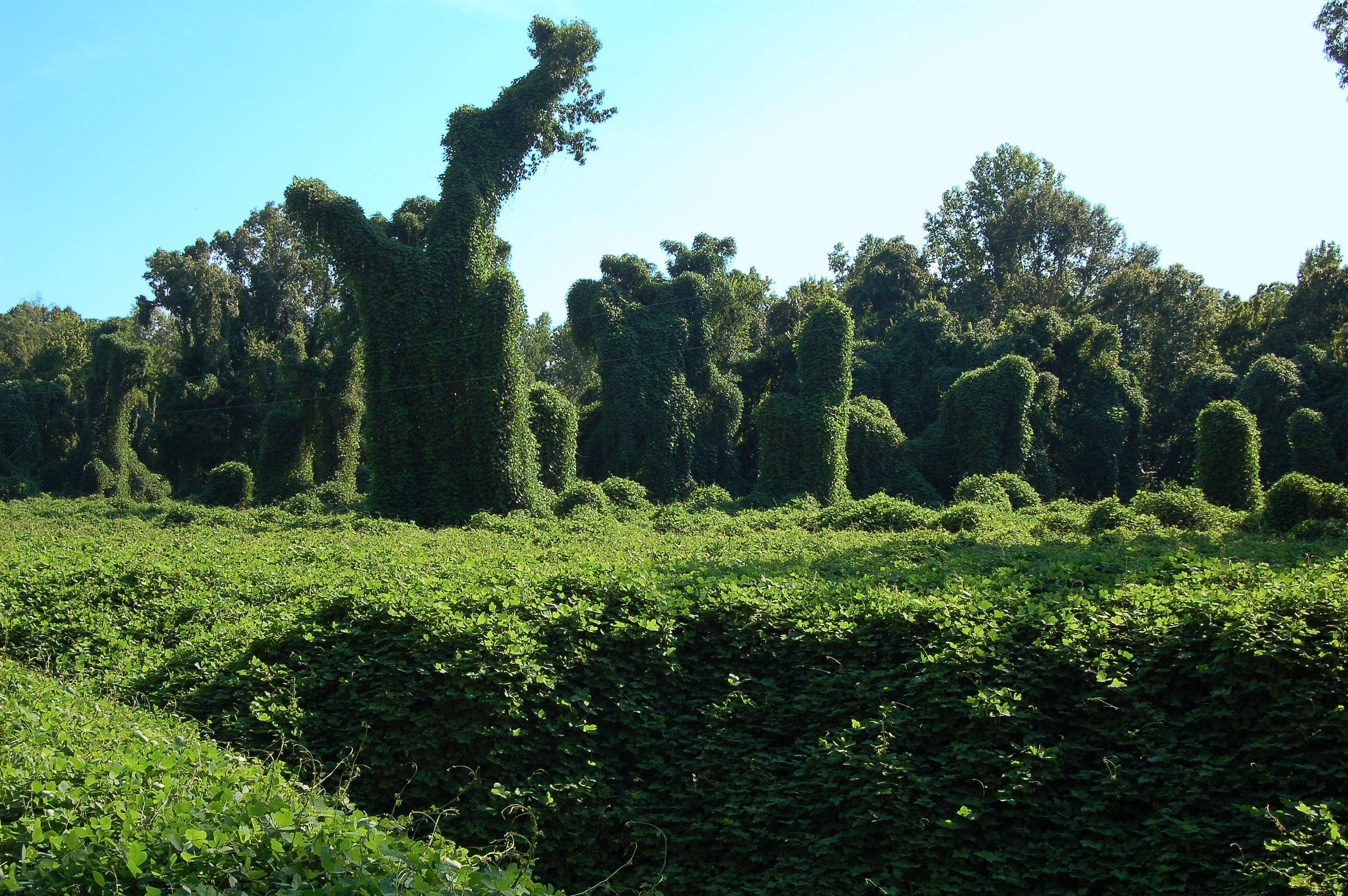
Kudzu in Mississippi
Kudzu covers everything. It spreads rapidly over open ground and, though it is slowed by trees and other obstacles, it isn't by much. The sight at left is not unusual in areas where the plant occurs. Due to this, native plants are very often smothered by the vine and few can survive the attack. It has been encroaching on National Parks where it threatens the plant life there. It is difficult to control, with the best method being burning or grazing by animals which may not always be a viable options.
A kudzu flower

The plant is native to Asia, including China, India, Japan, Malaysia, Indo-China, and Oceania. Though it has been introduced to numerous countries, it is only really considered a pest in the eastern US. It is used as an ingredient in cooking and also for many other purposes in its native range including as forage for animals. In the United States, it has been used to help prevent erosion, but other plants are available and are much better options. Believe it or not, the flowers are actually quite pretty.

Kudzu is listed on the 100 World's Worst Invasives as #77.

Images are from Wikimedia Commons under a Creative Commons license or are copyright free: one, two, three

Wednesday, June 29, 2011

Invasive Species: Zebra Mussel

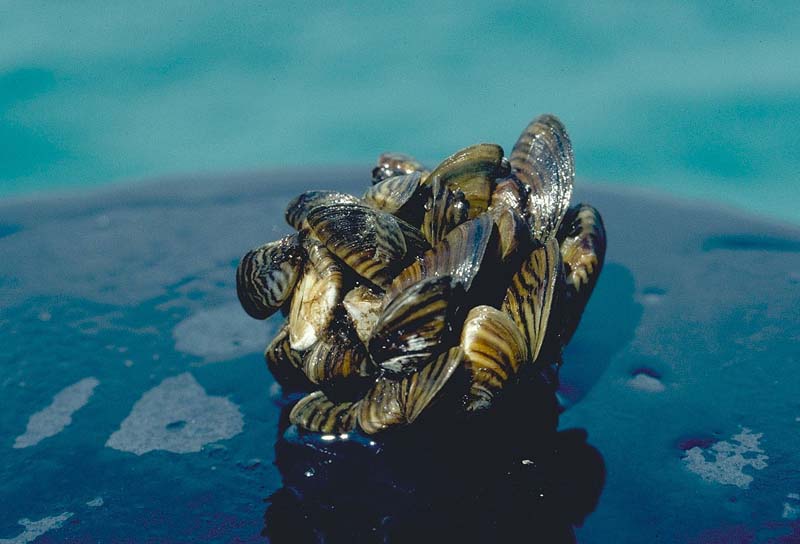
Out of curiosity, I Google'd "invasive species" and looked under images to see what would be the first thing to come up. It was the zebra mussel (Dreissena polymorpha), a species that has become infamous. The polymorpha species epithet describes the fact that these bivalves can vary in their appearance, as shown below.

Zebra mussels with various phenotypes
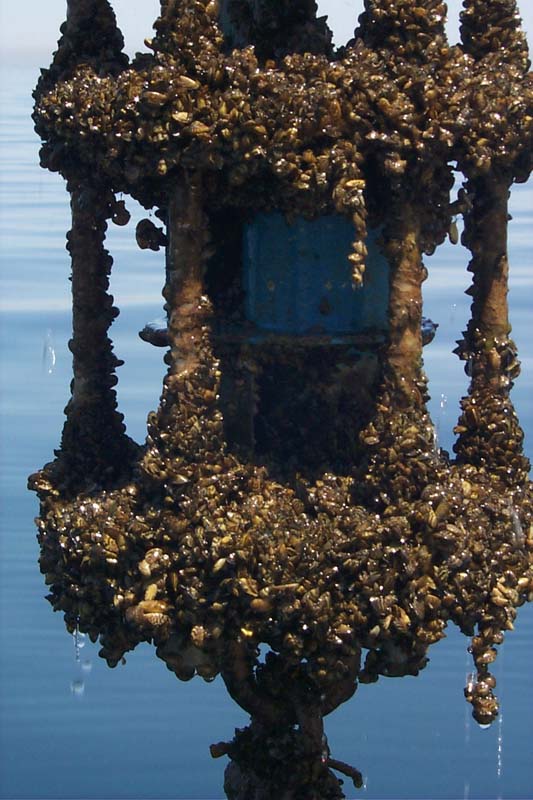
Mussels fowling equipment
These little mussels have been devastating the Great Lakes as well as many other parts of the world. One of the serious problems they cause is the clogging of pipes and fowling of ships and other equipment found in the water (including the device at right, which is used to measure current). This is caused by the fact that they will cluster tightly together, one on top of the other using byssal threads. Pipes, ship hulls, and other equipment must be constantly cleaned both to remove the offending mussels, and in the case of small boats, attempt to prevent the spread of the mussels to other bodies of water.

Dense populations of zebra mussels also filter water incredibly quickly, and in doing so limit food available to other species and change the makeup of the plankton community in a body of water. By greatly reducing the plankton, the water becomes more clear, completely changing the living conditions for the resident species. They also will coat the bottom, benefiting some species but limiting space available to others. They have also been known to cover other species, including other bivalves and crustaceans. They often out-compete other bivalve species, and are stressing populations of the various species of endangered freshwater mussels.

A clump of zebra mussels
They are native to Eurasia (namely the Black, Caspian, Aral and Azov drainage basins), and were believed to have arrived at the Great Lakes in a larval form through ballast water. The zebra mussel has also been found invading waters of Scandinavia, Britain, Ireland, western and central Europe, and north-west Russia, along with other areas of North America. It appeared in California in 2008. It is currently listed at #31 on the list of 100 World's Worst Invasives.

Images are copyright free from Wikimedia commons.

Saturday, June 25, 2011

Invasive Species: Red Imported Fire Ant

The red imported fire ant or RIFA: Solenopsis invicta
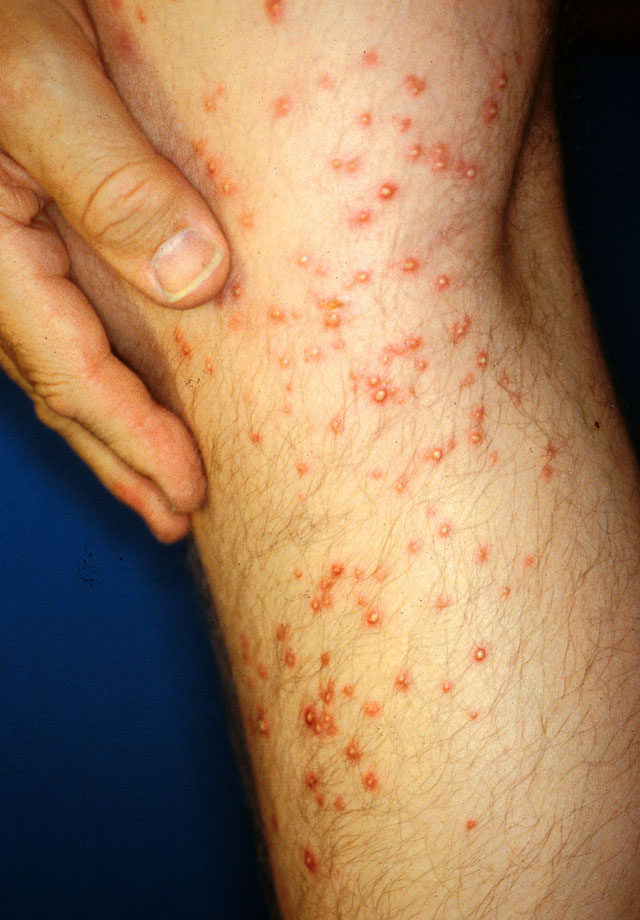
Welts caused by fire ant "bites"
If you live in the southern United States, I can guarantee you already know of these little insects. They produce prominent, large, sandy mounds and if you step in one or disturb one in any way, they attack (very violently at that), stinging in mass numbers within seconds. Their stings cause a burning sensation and intense itching, which is where their common name comes from. Red, angry welts follow, each marking a different sting, and they will continue to burn for a week or more. For those who are allergic, it is far worse. They are native to South America, and their non-native range spans two continents and includes Australia, the United States, New Zealand, and the Caribbean Puerto Rico and the Virgin Islands. Colonies can be as large as 400,000 ants.

The sting is one of the things that allows them to be such an aggressive invasive. With it, they can bring down much larger prey than other ant species, and also ward off predators. Most horrifyingly of all, if an area floods most ants will have little chance, but the fire ants will build their own raft. Yes, the video is of a raft made out of nothing but ants. Imagine if your home is devastated by a flood and you're wading through the water to safety and come across that.


The red imported fire ant is one of the 100 World's Worst Invasives, listed currently at number 86. This is mainly due to their estimated 500 million to several billion dollar impact on agriculture annually. They damage crops, mess with equipment, and sting workers. They also can infest common equipment, like swimming pool pumps, cars, computers, and washing machines. They are also a major nuisance, as nearly everyone in their non-native range has been stung at least once, and they are dangerous to those allergic to them.

Images are copyright free from Wikimedia Commons 

Monday, June 20, 2011

Invasive Species: Red Lionfish

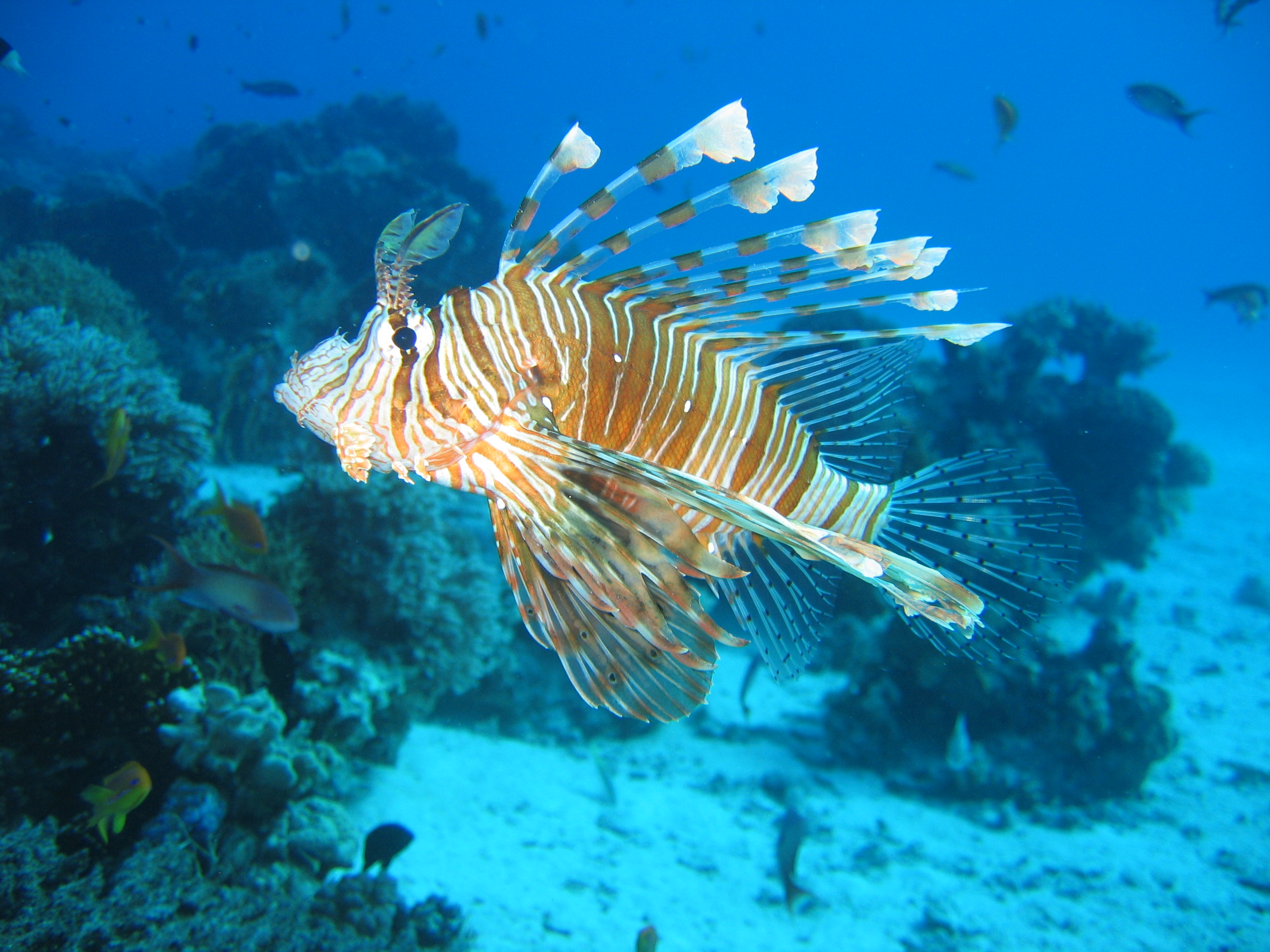
 Red Lionfish (Pterois volitans)

Believe it or not, this highly prized aquarium fish has become an aggressive invasive along the Eastern coast of the United States. Since they are such a popular aquarium fish, it is believed that they have been released by private owners. Also, during Hurricane Andrew in 1992, an aquarium was destroyed and six of these fish were released into the ocean. Since then, their numbers have skyrocketed and they have been spotted as far north as New York. The adults have no natural predators and the larvae can swim great distances, which probably accounts for them spreading so quickly. They eat virtually any other fish, and often will eat larvae, which makes them a major threat to native wildlife.

These fish were first seen at Gray's Reef National Marine Sanctuary off the Georgia coast in 2007, putting all of the animals protected there at risk. After hearing a lecture from a staff member at Gray's Reef, I must say it sounds like things look rather grim.

The species is venomous, with the spines along their back being the point of delivery. This makes them a danger to recreational swimmers, especially in areas like coastal Georgia where the water is usually quite murky. There is a push to try and get people to fish for them to help control the population. Supposedly they are rather tasty, but if not handled carefully the spines can be dangerous.

Images used are copyright-free from Wikimedia Commons 

Thursday, June 16, 2011

Invasive Species: Brown Anole

A male brown anole (Anolis sagreia) with dewlap extended

I first found out about the brown anole (small lizard native to the Caribbean) when I was in my Zoology class in 2008. At that point, none of the professors at my college, located in Southeastern Georgia had never seen one. They were something only seen in Florida, which has an ever-growing issue with invasives. Since then, they have become ever-more common, and earlier this year I did, in fact, see one on my college campus.

Invasive species are always dangerous because the true extent of their effect on a habitat will not reveal itself until the animal, or plant or whatever it may be, has been in the area for a significant period of time. Since these lizards have only been in Georgia for a short time, it is unclear what their presence will do to the native wild life.

Potential cause for alarm comes from the brown anole's relative, the green or Carolina anole (Anolis carolinensis, seen left). Since the brown anole's territory is expanding, more and more pressure will be placed on the greens, as their diets are quite similar. Also, and I have seen this first-hand during a trip to Florida, brown anoles will eat green anoles. In that same location, brown anoles clearly outnumbered green anoles. Even though this seems to imply that the browns are taking over, it is difficult to tell. It could just be that the greens are better able to blend in with their surroundings and thus were less easily observed. They are able to change from green to brown (the origin of their nickname "American chameleon") and are thus able to blend in very well. Or, it could in fact mean their numbers are dropping.

What does the future hold for these lizards? Will green anoles become extinct? Will the two species be able to coexist? Who knows. Unfortunately, we can only wait and see.


Images used are copyright-free from Wikimedia Commons