Showing posts with label cats. Show all posts

Thursday, September 18, 2014

For Long-Time Readers

Those familiar with this blog will recognize some furry faces that haven't shown up for a while. I feel like I've kept you all out of the loop. I've featured a number of animals so far on the blog, and I must share an unfortunate update about two of them.

Ashe


Ashe and his half brother Jen, who treated him like a matress
My brother's cat, Ashe, one of the sweetest little creatures I have met, was also quite sickly the last time I saw him. He was a tiny cat, believed to be a pseudo dwarf due to his small body and outsized ears and tail, giving him an eternally kittenish appearance. Though he had checked out okay with a vet, his appetite was poor for some time, turning him into a rather thin creature. After my brother moved away, Ashe's condition worsened. He limped along for a while on only one functioning kidney, but when the other failed in September of last year the decision was made that it was his time to go.

He was eighteen. He was a lap cat. I love lap cats.

Ashe begging for attention while he still lived with me. 

Albus


New Years 2014
As it so happened, a leak at my condo meant I was staying with my parents for a while and was present for the next set of events.

In better days, 2007
Albus, my parent's cat, ever the fighter, dealt with urinary problems for several years. A special diet and low-stress life helped him a lot, but he still had to be hospitalized multiple times due to blockages. This was not what was his undoing, however. He began vomiting with increasing frequency and losing weight rapidly. He was taken to the vet where it was discovered through a barium swallow that he had pyloric stenosis, a narrowing of the opening at the bottom of the stomach. I was startled when I saw the x-ray and realized how small the opening really was: less than one quarter of an inch in diameter. No wonder he's been having so many issues! His own body was starving him. We changed his diet to try to get some weight on him so that he could make it through the required surgical fix. He was eating kitten food, due to the hope that the high caloric content would make it more likely he would get enough nutrients trickling through. He perked up and seemed to regain some of his vigor.

His ear tips started drooping as he lost weight. Ginny, his housemate, is still doing well to this day.
Then, we woke up one day to find Albus's ears tinged yellow. After rushing him to the vet, our fears were confirmed. He was jaundiced. He had also lost more weight, a half pound in a little over a week, taking him down to 10.2 pounds. Being a big cat, he was scrawny. You could feel most of his bones. The vet deduced that he had feline hepatic lipidosis (a fatty liver), which is caused by sudden weight loss. Hepatic lipidosis has a fairly good recovery rate with proper treatment, which involves getting a lot of food into the cat so that their body stops using fat as an energy source. Tube feeding is often necessary.
In his last week

We had a very lengthy discussion, asked the vet numerous questions, and had a good cry. Considering everything surrounding Albus' pyloric stenosis, including the fact that the liquid from the barium swallow stayed in his stomach for four hours before they could get a good x-ray of it trickling through the constriction, it didn't look like the treatment for the fatty liver would work. Without proper treatment, hepatic lipidosis does not have a very high survival rate, and he was already weak from the weight loss. Even if he did somehow make it through that hurdle, there was still the pyloric stenosis, and if he continued losing weight at the rate he had, it wouldn't be long before that did him in. Being so weak, he probably wouldn't make it through an attempt at surgery to alleviate the constriction. It seemed like his own body was against him. We decided he had suffered enough.

It was March 14th. He was thirteen.


 I miss snuggling with him.

Wednesday, September 26, 2012

Why Tortoiseshells are Tortoiseshells

Tortoiseshell cats display a wide range of markings
Most people who are familiar with cats know about tortoiseshells: those patchy, red and black kitties. Not necessarily as well known is the fact that virtually all tortoiseshells are female. Why is that?

Torti with lots of black
In domestic cats, the basic black and red pigment genes are actually located on the X chromosomes, and are thus sex-linked. Since cats are like us and their sex is determined by the X-Y system, males have only one X chromosome, while females have two of them. A lot of cats will have all chromosomes of the same type, which will lead to the cat having all red pigment or all black pigment. However, the genes are also basically co-dominant, which leads to both colors being expressed in females that have both a red X and a black X. However, things are a bit more complicated than that.

The exact mechanism behind a tortoiseshell's patch coat is actually quite fascinating. As with all X-Y animals, females don't necessarily benefit from having more than one copy of the X chromosome. The extra dose of genetic material can actually be problematic, so the body undergoes what it needs to for what is called dosage compensation. Basically, the body only wants to work with one chromosome at a time in each cell. Due to this, cells will undergo X-chromosome inactivation, packaging the material into a tiny bundle that is not usable. This little bundle is known as a Barr body.

A cell nucleus with a Barr body. Xi is the inactive chromosome in a Barr body, while Xa marks the active one
Torti-tabby ("torbie") with lots of red
Barr body formation is directly linked to the patchy coloration of tortoiseshells. Where the cat has an active black chromosome, the fur will be black pigmented. Where the cat has an active red chromosome, the fur will be red pigmented. Also, the chromosomal inactivation happens at varying stages of development. After it happens, all cells that come from the initial chromosonally inactivated cell will be of the same type. So, if a chromosome become inactive very early in development, it will lead to a large patch of fur that's the same color. Later inactivation leads to smaller patches. This is how tortoiseshell cats can have such variation in the size of their patches.

A tortoiseshell with fairly even color distribution
Believe it or not, looking for Barr bodies is one of the easiest ways to determine if an individual has a sex chromosomal abnormality. Women with no Barr bodies are likely to be XO, while those with more than one would be XXX, XXXX, or higher. Males with Barr bodies are likely XXY, and multiple Barr bodies would be XXXY or higher. Of course, this only works for those with unusual numbers of X chromosomes and another sort of test must be done for multiple Y's.

A calico cat
Calico cats are almost exactly like tortoiseshell cats, with the only difference being the addition of the gene for white markings. 

If you see a male tortoiseshell or calico cat, it's likely to have a chromosomal abnormality such as Klinefelters syndrome (XXY) or some sort of mutation. There have been more than a few male tortoiseshells that have been found to be either chimeras, which have the DNA of two separate individuals, or mosaics resulting from some sort of mutation.

Also an interesting feature of tortoiseshells is that they cannot really be cloned. Since their coloration is based on random chromosome inactivation, the offspring will never look the same as its parent. In fact, it's more likely that the clone will be solid black or red rather than tortoiseshell since whatever cell that is collected from the donor will have already undergone the inactivation. Indeed, the first ever cloned cat, though cloned from a calico tabby, ended up a simple, uni-colored, black-pigmented tabby.

Sources are Texas A&M, Memorial University, Kimball's Biology, University of Miami, Messy Beast, Cat Fanciers' Association, Berkley, io9, and Dr. Sophia Yin. Images are from Wikimedia Commons under creative Commons licenses: one, two, three, four, five, six.

Wednesday, August 15, 2012

Cats don't Prefer Sweets

Cats taste the world very differently than humans

One thing that I found fascinating during my undergraduate studies was my Modern Biology class. It involved learning about and implementing numerous techniques that are rather new to the field of biology. Thanks to this class, I isolated a number of different cell components, ran various biological molecules through a gel electrophoresis machine, and performed polymerase chain reaction. I also took my own DNA and prepared it for sequencing, which involved refining and isolating the material, cutting out the gene we wanted to look at, then replicating it so that it could be sent off for the actual sequencing process to be performed.

The gene that we looked at was one of the two that go into making the receptors on your tongue that register sweetness. Specifically, the TAS1R2 (taste receptor, type 1, member 2) gene. TAS1R2 must join up with a second protein to signal that sweet flavor. Here is the TAS1R2 gene (specifically, my copy) in its three hundred fifty-five nucleotide entirety: 
GCTGCGTACCACACCCAGCGCCGACCACCACATCGAGGCCATGGTGCAGCTGATGCTGCACTTCCGCTGGAACTGGATCATTGTGCTGGTGAGCAGCGACACCTATGGCCGCGACAATGGCCAGCTGCTTGGCGAGCGCGTGGCCCGGCGCGACATCTGCATCGCCTTCCAGGAGACGCTGCCCACACTGCAGCCCAACCAGAACATGACGTCAGAGGAGCGCCAGCGCCTGGTGACCATTGTGGACAAGCTGCAGCAGAGCACAGCGCGCGTCGTGGTCGTGTTCTCGCCCGACCTGACCCTGTACCACTTCTTCAATGAGGTGCTGCGCCAGAACTTCACTGGCGCCGTGTGG
...not really that interesting.

This is your average TAS1R2 gene for Homo sapiens, nothing special. Just about every human out there has this exact sequence, with few exceptions (one of my classmates, for example, had a single point mutation). However, it is one gene crucial to why humans like sweets so much. This is what the gene looks like after it's been translated into its protein form (the letters are standard for amino acids):
Query  2    LRTTPSADHHIEAMVQLMLHFRWNWIIVLVSSDTYGRDNGQLLGERVARRDICIAFQETL  181
            LRTTPSADHHIEAMVQLMLHFRWNWIIVLVSSDTYGRDNGQLLGERVARRDICIAFQETL
Sbjct  82   LRTTPSADHHIEAMVQLMLHFRWNWIIVLVSSDTYGRDNGQLLGERVARRDICIAFQETL  141

Query  182  PTLQPNQNMTSEERQRLVTIVDKLQQSTARVVVVFSPDLTLYHFFNEVLRQNFTGAVW  355
            PTLQPNQNMTSEERQRLVTIVDKLQQSTARVVVVFSPDLTLYHFFNEVLRQNFTGAVW
Sbjct  142  PTLQPNQNMTSEERQRLVTIVDKLQQSTARVVVVFSPDLTLYHFFNEVLRQNFTGAVW  199 
This is a comparison showing my own protein versus the average human. It's a perfect match and codes for a fully functional receptor protein. This gene is seen in a very wide variety of different animals, and the shared genetic material is quite astounding, allowing for countless species to have the ability to taste sweetness.

A cat enjoying a fresh fish

So, why am I talking about humans a post about cats? Well, let's compare the sequence above to the equivalent gene in a cat. The "query"line is the human gene again, and the "sbjct" or subject line is the equivalent gene in Felis silvestris catus.
Query  2    LRTTPSADHHIEAMVQLMLHFRWNWIIVLVSSDTYGRDNGQLLGERVARRDICIAFQETL  181
            LRT P+ +H   AM  ++ +FRWNW+  + + D YGR   +   E    RDICI F E +
Sbjct  184  LRTIPNDEHQATAMADIIEYFRWNWVGTIAADDDYGRPGIEKFREEAEERDICIDFSELI  243

Query  182  PTLQPNQNMTSEERQRLVTIVDKLQQSTARVVVVFSPDLTLYHFFNEVLRQNFTGAVW  355
                 +Q    EE Q++V ++   Q STA+V+VVFS    L     E++R+N TG +W
Sbjct  244  -----SQYSDEEEIQQVVEVI---QNSTAKVIVVFSSGPDLEPLIKEIVRRNITGRIW  293
Cat tongue anatomy
Overall, the genes are fairly similar, but with one major difference. I'm not going to get too complicated with this, but the dashes you see indicate amino acids that are absent in the final protein found in cats but present in humans: a deletion. Changes in a protein don't necessarily result in a change in its functionality, but that deletion is enough to result in the cat's protein being non-functional. Since the protein cannot bond to molecules of sugars or sweeteners, cats simply cannot register the sensation of sweetness. This deletion seems to be unique to the cat family, since other carnivores, such as dogs and bears, have a functioning gene. From what I remember, big cats have this non-functioning gene as well, but it isn't known whether or not the cat allies (such as civets and genets) share this unusual feature.

Though cats aren't able to taste sweetness, this doesn't mean they will avoid it. They are, in fact, completely indifferent to the flavor. So, if your kitty likes something sweet, it's probably going after something other than the sugar. They're quite fond of certain amino acids, so it's possible that's what your kitty enjoys.

Sources Basic Local Alignment Search Tool (BLAST), PLOS Genetics, Journal of Nutrition, and GeneCards. Images are from Wikimedia Commons under Creative Commons licenses: one, two, three.

By the way, BLAST is an amazing tool. Feel free to plug in the ATCG sequence above into their databases to compare the gene for yourself. The programs I used for this post are nucleotide blast and blastx.

Sunday, July 29, 2012

Storms

We had a tornado warning today and for the first time since I've moved to the condo the tornado sirens went off, as well as other alerts saying "take cover now." So, the significant other and I piled into my closet with Ebon, Siggy, and the two cats. Nothing hit us, but I couldn't help but be amused by what it was like to have all of us in such a small space. The last time I got a "take cover now" alert it was me, Ebon, and my mom's two cats in a bathroom. A bathroom larger than the closet at that, and I was dealing with the semi-feral Ginny not wanting anything at all to do with Ebon. Ah, thunderstorms.

Everyone all huddled together in the closet. Of course, Ebon's just a massive shadow

Monday, November 14, 2011

Recent Happenings

Things have been pretty busy as of late. As always, the later part of the semester is always the busiest, which is why I missed several post days recently. Luckily, most of my major assignments have been completed and turned in and I can turn to less exhausting ways of keeping myself busy.

Anyway, on to some pictures of the fuzzy creatures in my life.

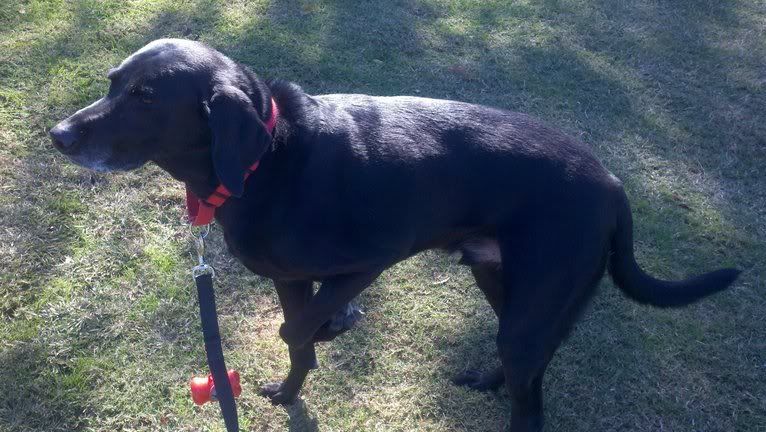
Ebon at the vet before getting his yearly vaccinations early this month. He knows the place well, and really doesn't like being there. He gets extremely anxious and basically forgets all of his training. He jumps and whines and trots in circles and pulls at the leash. I've been trying to work with him on that. At least he's not fear-aggressive at all!
This is Jen, one of my brother's cats, who has been introduced previously. Jen is the perpetually-happy, bigger, older brother. I believe he is fifteen years old. When I say perpetually happy, I mean perpetually happy. He is nearly constantly purring and trying to rub his face all over you. He loves belly rubs and if you touch him he'll attack you with love. His meow is a bit odd, since he really more screams than anything else. His purr is also quite loud. He usually has this odd wide-eyed look on his face, which I call "The Jen Face." He's a very unusual cat, and honestly one of the best words to describe him is "simple."
For contrast, here is Ash, who has also been mentioned before. Ash is the more mellow, smaller, younger brother. I believe he is fourteen years old. He's a petite, quiet little fireball who chirps like a bird when he meows. His favorite place is in your lap (which is where he is in this picture). He's very kitten-like in appearance but not in temperament, and probably has some sort of condition that made him so small and finely boned. He's the problem-child when it comes to relations with Ebon. Usually, they're fine with each other now, but when we first introduced them he was the one to swat at the dog.
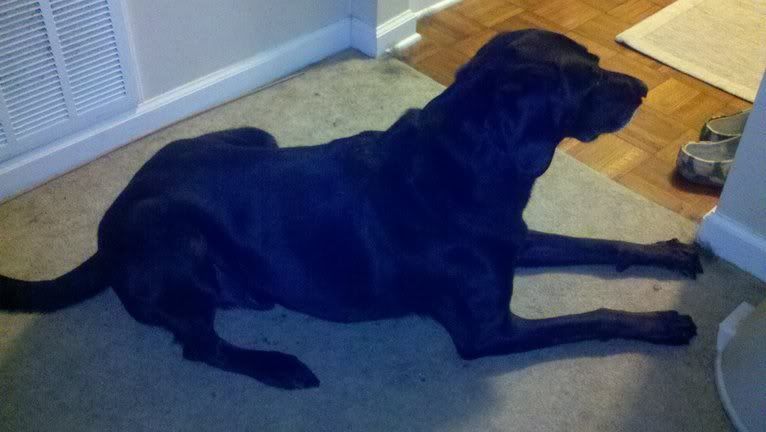
Ebon being good and waiting for his dinner today. I make him do a little "work" for every meal. Usually it's tricks, sometimes it's waiting for thirty seconds or more, other times I give him a food puzzle.
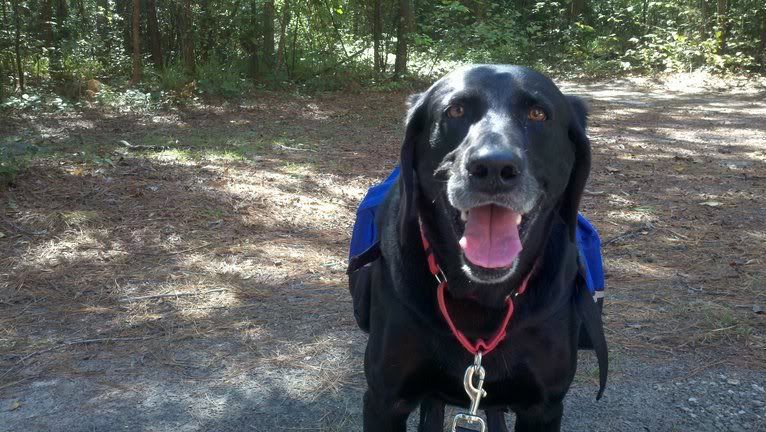
And, of course, I did change my banner image. It's from a nice walk Ebon and I took a while ago now.
Ebon loves his backpack! Here's it's only weighted with two liters of water (about four and a half pounds of weight). I would like it to be a bit heavier, probably eight to ten pounds. This is actually part of the same trail I mentioned before.