|
| Two variants of the agouti gene: yellow on the left and a wild type on the right |
Pleiotropy is a consequence of genetics that many people are not aware of. Specifically, this is when the most obvious characteristic caused by some genetic variant is not the only trait that is caused by the gene. Frequently, these characteristics seem like they would be completely unrelated, but it is surprising how many examples there are of vastly different traits being due to a small change in an organism's genetic code.
 |
| My three mice: Pepper (black piebald longhair), Poppy (black piebald, wild coat), and Ginger (lethal yellow satin) |
 |
| Ginger before her weight gain |
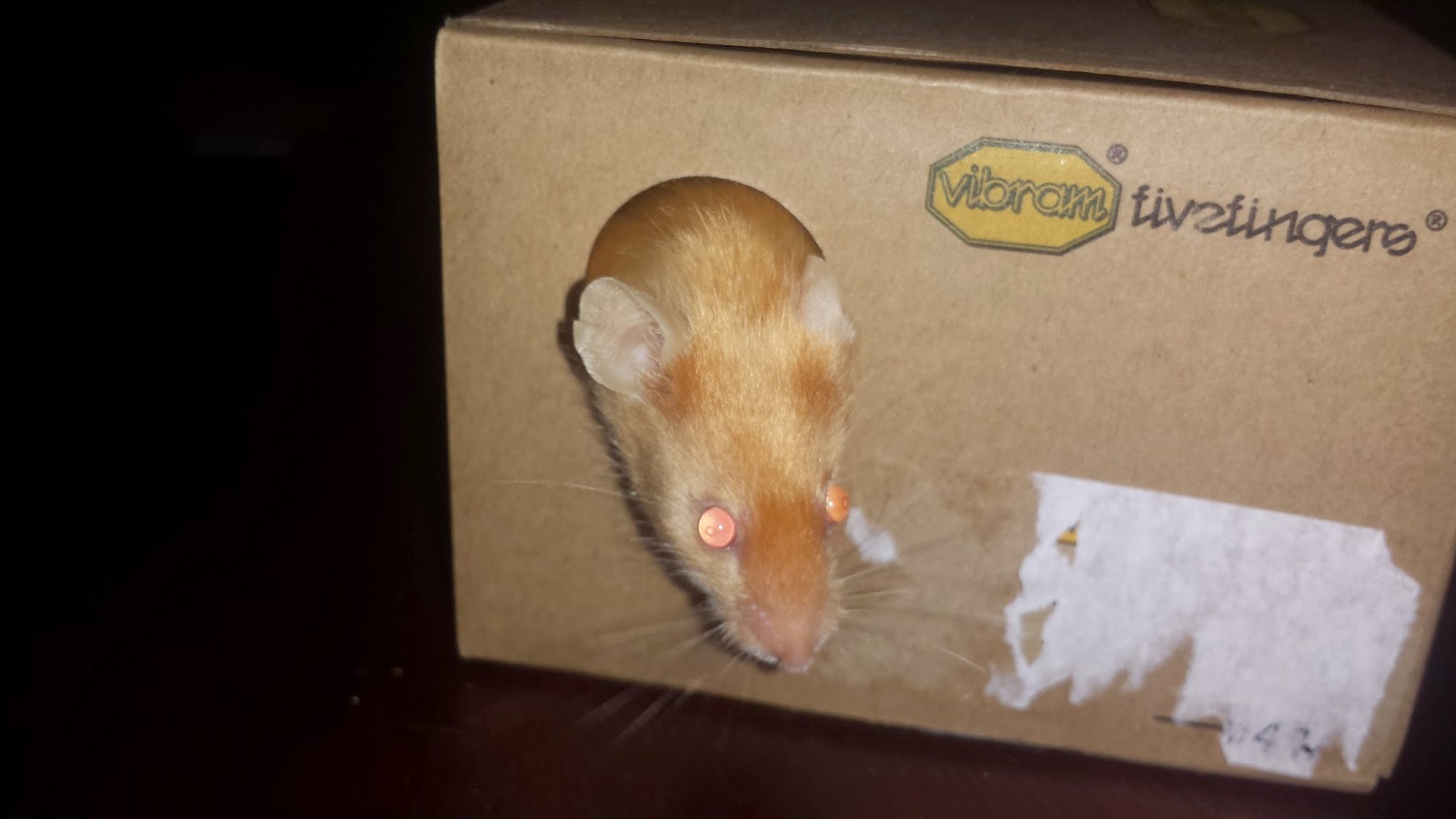
In May I brought home three fancy mice, having wanted to own a small mammal for quite some time. I chose my trio or females from their litter based on who came to me first, so it's just chance that I brought home a dominant yellow. Dominant yellow is also known as lethal yellow due to embryos that are homozygous dominant becoming nonviable very early in their development. As I only had very cursory knowledge of the amazing amount of variation in fancy mice before bringing my three home, I did not find out some of the interesting pleiotropic effects of the lethal yellow gene until I noticed something that distressed me. While her sisters were maintaining healthy body weights, my yellow looked very fat in comparison. After weighing them, I was surprised to find that, while her sisters were in fact right at the ideal thirty gram weight, my yellow weighed a whopping forty grams.
Lethal yellow is a gene that has been used rather heavily in scientific research. Why? Along with the golden coat, this form of yellow causes obesity, insulin-resistant diabetes-like traits, and an increased likelihood of developing tumors, among other things. Understandably, this has lead to lethal yellow lab mice being used in the research of diabetes. Interestingly enough, unlike some other mouse colors, dominant yellow had existed among fancy mice for a very long time, their usefulness for research only discovered some time later.
At first glance, most people would look at a dominant yellow mouse and say, "Isn't that pretty!" without having any idea of what else that color means. If I had previously known what this color meant, I might have decided against bringing my lethal yellow home. In all likelihood, she will live a shorter life than her sisters due to the pure chance of her being born a dominant yellow.
 |
| Thanks to its blue eye, this cat is probably deaf in one ear. |
In cats, one of the most prominent examples of pleiotropy involves dominant white. This gene, like lethal yellow, covers any other color that the animal would have. It is also inherited independently from the other white genes found in cats, which cause the tuxedo, van, and "cow cat" patters, among others. Dominant white causes an overall increase in the likelihood of the animal being deaf, but deafness is seen more often in individuals with at least one blue eye. With only one blue eye, the deafness is usually in the ear that is on the same side of the head as the blue eye. When both eyes are blue, it's highly likely that the cat will be deaf in both ears.
The white spotting genes (causing tuxedo, etc.) also can lead to deafness, but this is not seen as frequently as deafness in dominant white cats.
There are countless other instances of pleiotropy out there, some of which have not been confirmed through research. Correlation implies pleiotropy, and many genes correlate with secondary traits.
Sources are Genetics, North Dakota State University, PubMed, University of Tennessee at Knoxville, Genetics (second article), Berkeley, Louisiana State University, and MessyBeast. Images are from Wikimedia Commons with the exception of the photographs of my own mice and are under Creative Commons licenses: 1, 2.