Sunday, November 27, 2011

Vacation Wrap-Up (image heavy)

For the last several days I was in Mississippi, visiting my grandparents and enjoying my Thanksgiving. We got to meet my dad's new retired racing greyhound, Siggy. Siggy's a great dog, though still learning to relax and just be a dog. Ebon handled the entire trip pretty well, but on Friday (after a lot of romping around and eating too much people food and treats) he had some soft stool, so I stole a can of pumpkin to get him better. It worked like a charm.

Anyway, on to the pictures:

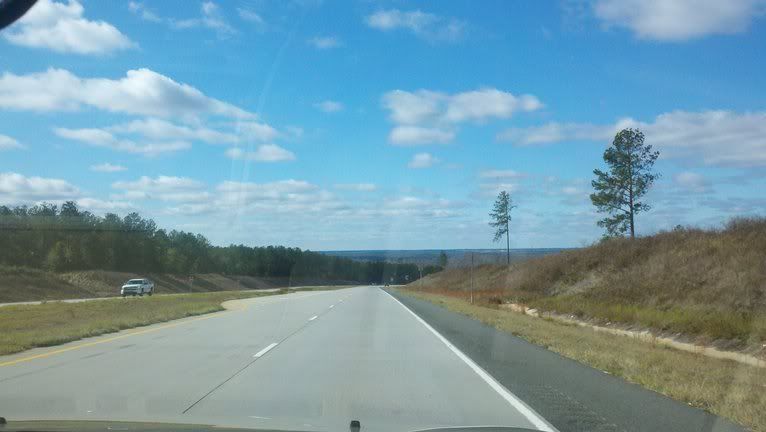
On the drive out, at the first sign of hills! Since I live on flat land, hills are kind of a big thing.
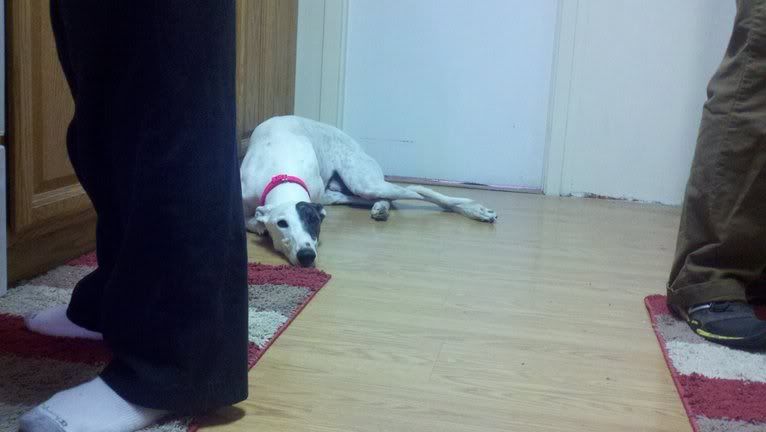
My introduction to Siggy. He slept most of the time, and liked to be in the kitchen while food was being prepared. Of course, greyhound are infamous counter surfers so we were continuously guarding food and watching him. Despite that, he sneakily managed to nab a few items. He stole the plastic bag our leftover turkey had been in, and I got it back from him with only a little coaxing. He also got hold of a wooden spoon that had been used to make soup and bit it in half.
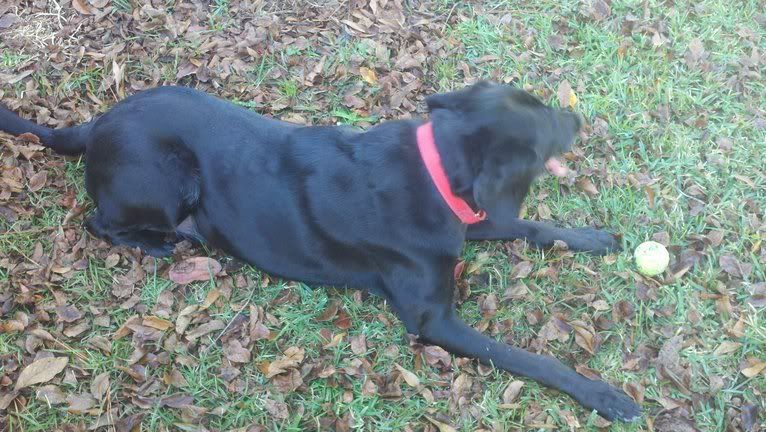
Ebon, exhausted after a nice game of fetch. He got so much exercise while we were gone that he's currently crashed out on his bed by my feet.
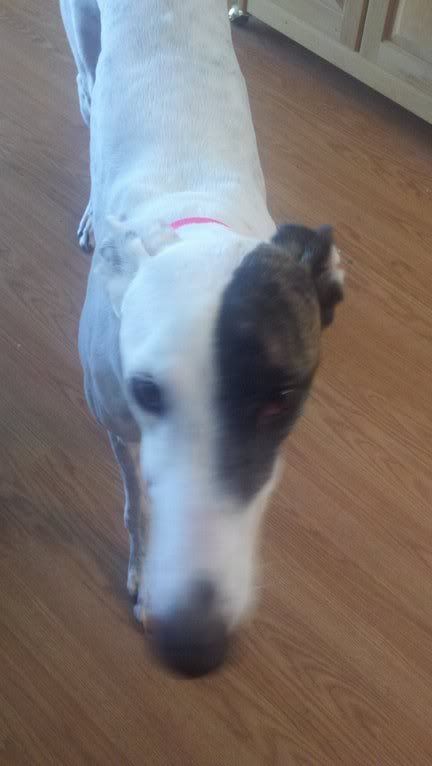
More Siggy, showing his gorgeous brindle patch and his missing toe. His foot was injured during his racing career and the toe had to be amputated. The collar came free with his adoption, and we're all amused that it's not just pink, but hot pink.
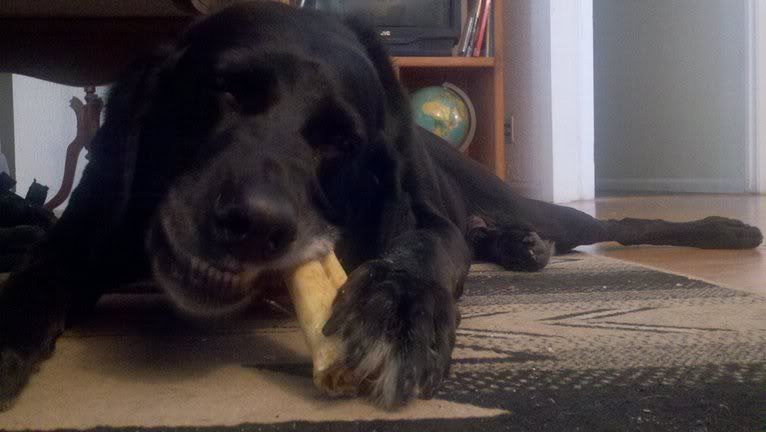
Ebon enjoying a rawhide my dad gave him.
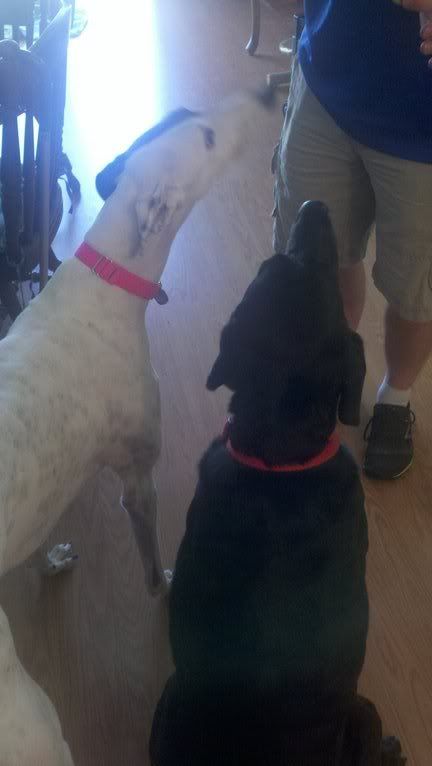
Ebon and Siggy begging for treats.

Siggy begging for attention.


During the trip Ebon was ridiculously happy thanks to all of play and the walks and hikes we took. I have a very extensive family, a portion of which lives in the area we visited. One of my great uncles owns a large tract of land where we went for a couple of long walks. Ebon was able to be off lead, and he reveled in being able to go and sniff everything in sight. He has quite good off lead "trail manners" and never strayed out of sight. Despite the temptings of wildlife sights, sounds, and especially smells. There's a pond on the land and he got to go for a little dip, though the water was deeper than either of us expected and he needed help to get back to dry land. One of my great aunts is a nun (yes, a nun) and we went to her place of residence: a small house set behind the center at which she works. The woman is eighty-three and over the past few years she cut a trait, by hand, through the woods behind the convent and associated buildings. We took a hike along this trail with the dogs. I'm still amazed at how spry she is! We also took a walk around my grandparents' neighborhood, which unfortunately involved being chased by dogs that some of the neighbors let run loose. I can't express how frustrating that situation is.

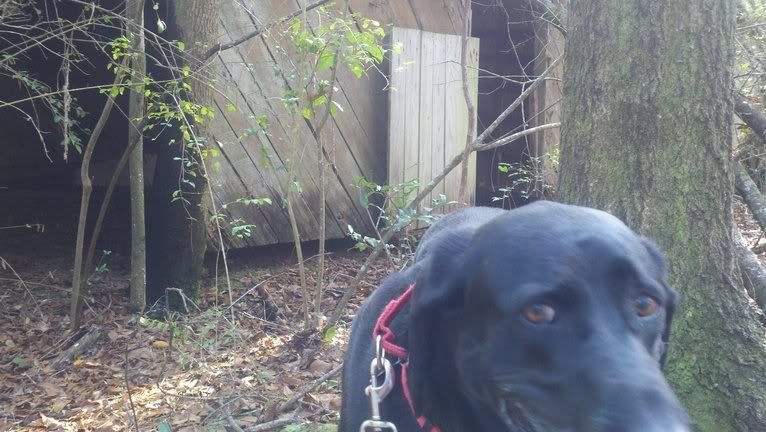
Ebon by an old barn on the convent grounds. The oldest buildings date back to the late 1800's, and the stable housed the horses they used for transportation.
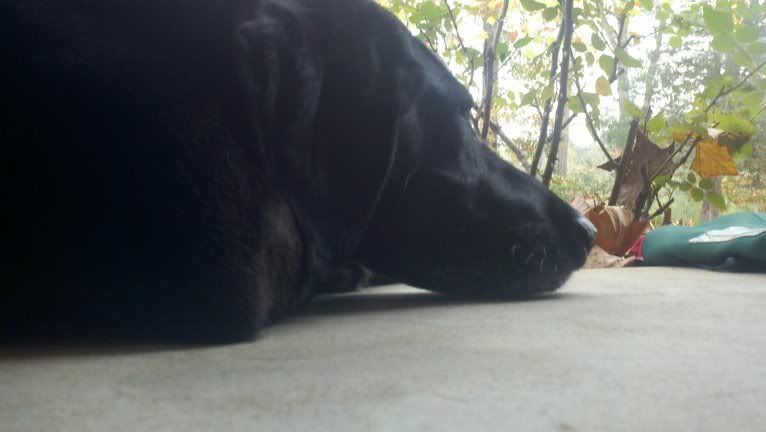
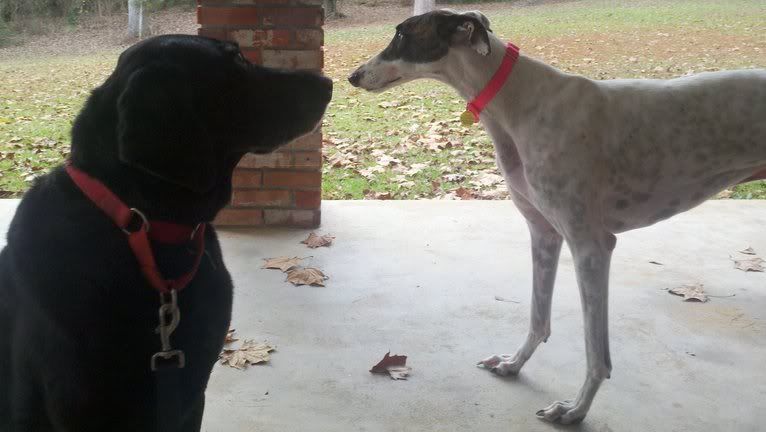
Ebon resting on my great aunt's porch.
Ebon and Siggy and my great aunt's. I think it's funny that this makes Ebon look bigger. Siggy is several inches taller than Ebon, though Ebon has about nine pounds on him.
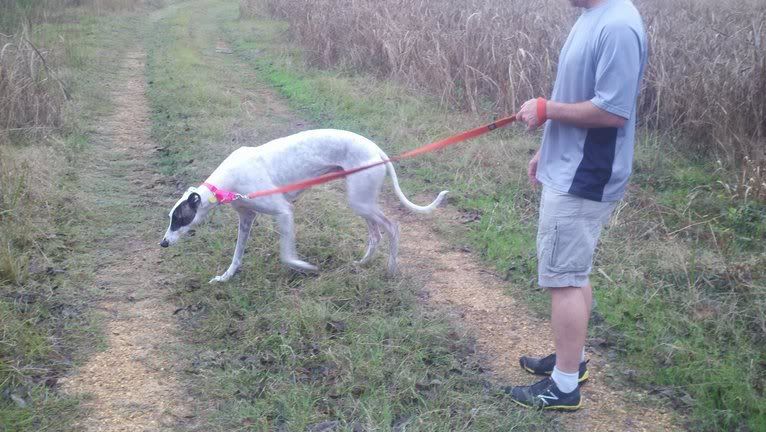
My dad and Siggy on my great uncle's land.
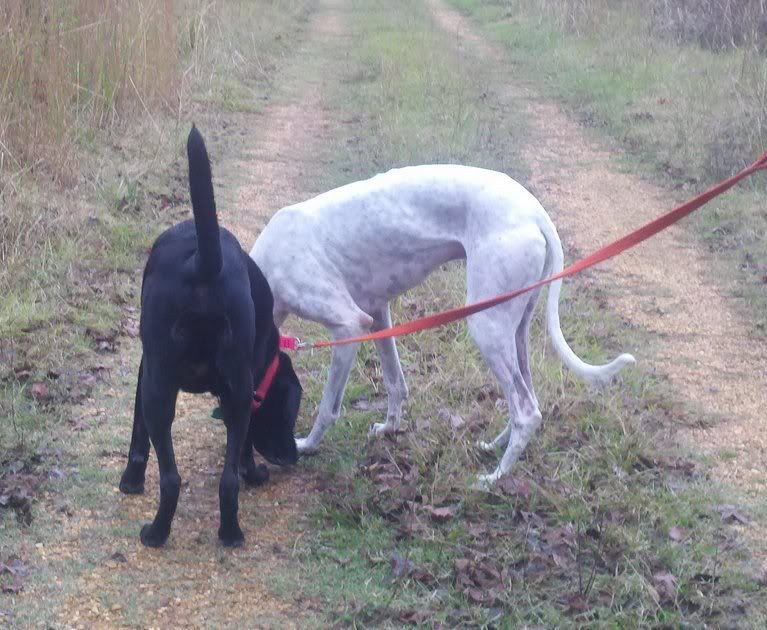
Ebon and Siggy on my great uncle's land. I did get a picture of Ebon trotting along the road but it didn't come out.
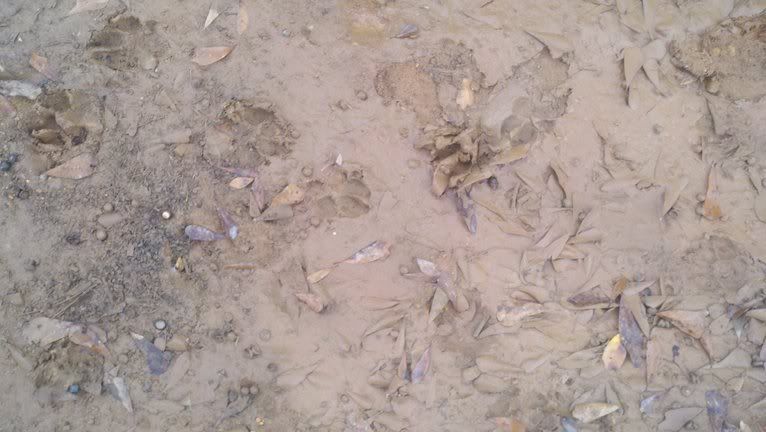
Ebon's paw prints in the mud on the same road. Siggy's paw prints are quite interesting due to the missing toe, but you can't see them here.
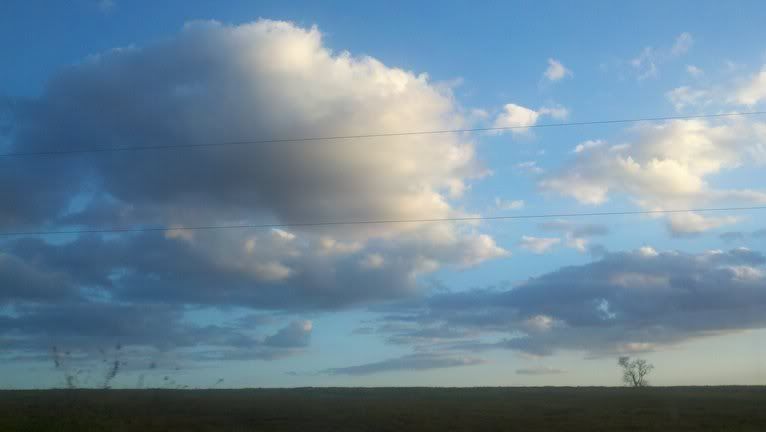
A beautiful sky on the way home.
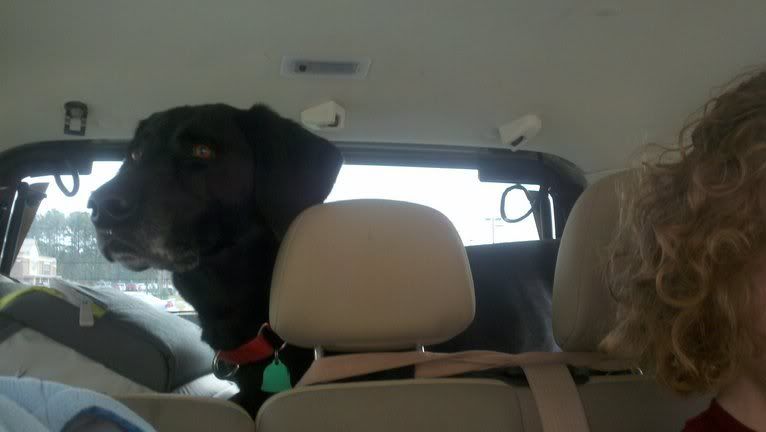
Ebon in the car only a few miles from home. He was starting to know where we were and was excited to get out and stretch his legs.
I had a great time, though I ate too much food. Ebon also had a blast. Getting to hand around with Siggy was a lot of fun, since for my next dog I plan to get either a basenji or a greyhound.

Saturday, November 26, 2011

Crazy Plants: Venus Flytrap

A trap of the Venus flytrap (Dionaea muscipula)

Native distribution of this species
Of course, carnivorous plants have to be some of the most fascinating ones out there due to the fact that they don't strictly photosynthesize all of their food. Instead, they use specialized structures to capture insects to aide in their own nutrition. Most of them can grow without this extra food source, but are much healthier when insects are readily available. Generally, carnivorous plants are only found in areas with poor soil, which is true of the Venus flytrap. In fact, it is native to my area, where the soil is sandy, often saturated with water, and acidic in pH. This harsh environment can make it very difficult for plants to grow, so several different carnivorous plants are found locally.

Multiple views, including the flowers
The Venus flytrap is famous for the action of its traps. Some carnivorous plants use pitchers or other devices to capture insects, but the flytrap uses traps made from modified leaves. The red coloration on the inside is meant to mimic rotting meat to attract insects, and a sweet nectar is also meant to attract. Tiny hairs on the inside of the trap are triggers that cause the trap to close, and the more of the hairs that are triggered, the faster and tighter will it close. A minimum of two hairs have to be triggered before the trap will close at all. The projections on the outer edge of the trap are used to keep struggling insects inside. For digestion of prey to occur, the trap has to close completely. The flowers are rather pretty as well.

The Venus fly trap is a prized plant for cultivation due to its interesting shape, color, and behavior. Unfortunately, it has proven to be such a popular plant and so many have been collected that they actually became endangered. Currently, according to the IUCN Red List, the plant is Vulnerable.The major threat continues to be the illegal collection of these plants.

Here's a video of this unusual plant (and other carnivorous plants), narrated by the ever-great David Attenborough:


Source is the Botanical Society of America and the ARKive. Images are from Wikimedia Commons and are either under Creative Commons licenses or are copyright free: one, two, three.

Friday, November 25, 2011

Mismark Case Study: Poodle

Poodles in two of the accepted colors according to the various standards throughout the world.
This poodle is a sable mismark
The standard for the poodle does accept a fairly wide range of type. Dogs can range from eight inches tall to twenty or more and still be perfectly allowable. There are also a great number of colors that are allowed. The AKC allows blue, gray, silver, brown, cafe-au-lait (the blue+brown=fawn), apricot, cream, black, and white. Dogs other than the brown and cafe-au-lait are not allowed to have liver pigmentation. What is considered a "mismark" on a poodle mostly depends on what standard you are looking at. For example, the AKC does not allow piebald, sable, brindle, or "phantom" (tan pointed) poodles. Some standards allow phantoms. From what I can find, nearly all standards are like the AKC, with only solidly colored dogs being "acceptable." So, the potential mismarks for poodles are:
  • Off-pigmented dogs
    • In apricot, cream, red, or white
    • This poodle is a piebald mismark
    • With brown pigment
  • Sable
    • In red, apricot, or cream
    • With black, liver, blue, or fawn pigment
  • Phantom
    • In red, apricot, or cream
    • With black, liver, blue, or fawn pigment
  • Brindle
    • In red, apricot, or cream
    • Possibly in combination with sable or phantom
    • With black, liver, blue, or fawn pigment
  • Piebald
    • In any of the previously mentioned colors
    • With or without ticking

There are even breeders offering merle poodles. The appearance of the color in the breed likely occurred through an out-cross to some breed where merle is more common, since there is no precedence for merle poodles. For some reason, merle seems to be a major trend in color lately, with many breeds that did not previously come in merle "mysteriously" having merle appear in the population. Of course, a breeder probably did it out of curiosity to begin with, but adding merle to a breed opens up an all new kettle of potentially deformed fish. Double merle (and all of the health issues and deformities that are likely to happen) is always a major concern, so I don't see why someone would purposefully add merle to a breed where it previously was not present.

These poodles are phantom mismarks
Now, what issues do I see with the standard? Several. For example, like so many other breeds, poodles are usually bred in color classes. This is to avoid the production of such things as a liver-nosed cream. Of course, thanks mostly to the breed's popularity as a pet, there are breeders out there that breed specifically for the pied, phantom, and other mismark colorations. Both of these practices are ones that cause "breeds within breeds" and, in a breed with several size standards, creates quite numerous isolated populations that limit genetic variation considerably.

This poodle is a piebald mismark
In addition, as with every breed with a significant number of mismarks, I don't see why it's so terrible if a dog doesn't fit what some people think is ideal. Say, if an apricot dog has a liver nose. Or a black dog has brindle points. Or a red dog has sable overlay. Every breed standard in existence was written by a single person or a small group of people and what is considered "unacceptable" is purely based on their opinions. Breeding by color class splits up an already narrow gene pool and leads to major issues with inbreeding and thus worsened health. In the past, people didn't know any better, but now we have a good understanding of population genetics. All efforts should be made to maintain genetic diversity in domestic species. And, for the sake of general health, purebreds usually need as much help that they can get.